Why Are There So Many Ants in My House? What a Big Ant Crowd Really Means
 ✓ Reviewed by Emanuel Jaramillo
Published · Last reviewed · 8 min read
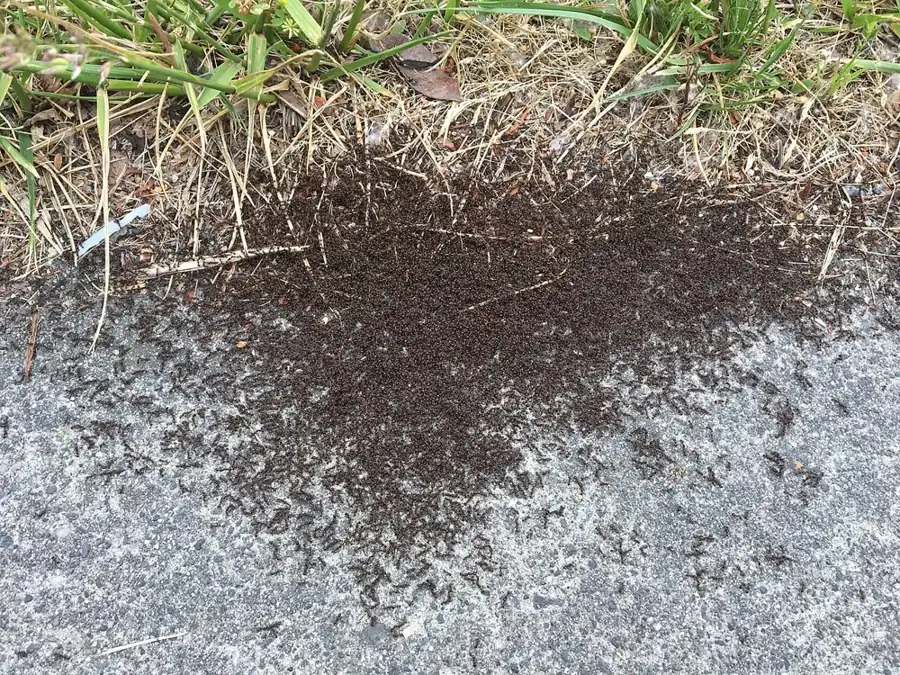
A sudden crowd of ants in the house means one colony has found something worth sharing, food, water or a dry warm place, and has sent its workers to it along a scent trail. The ants you can see are only the delivery crew. The University of Kentucky's ant guide puts colony size anywhere from hundreds to millions of ants depending on the species, with thousands more workers and one or more queens hidden in the nest for every line you see on the counter.
So the real question is not why there are so many ants, but why this colony chose your house this week, and whether it is living outside or inside. Those two answers decide what works. Spraying the trail does not; it is the most common reason a small ant problem turns into a big one.
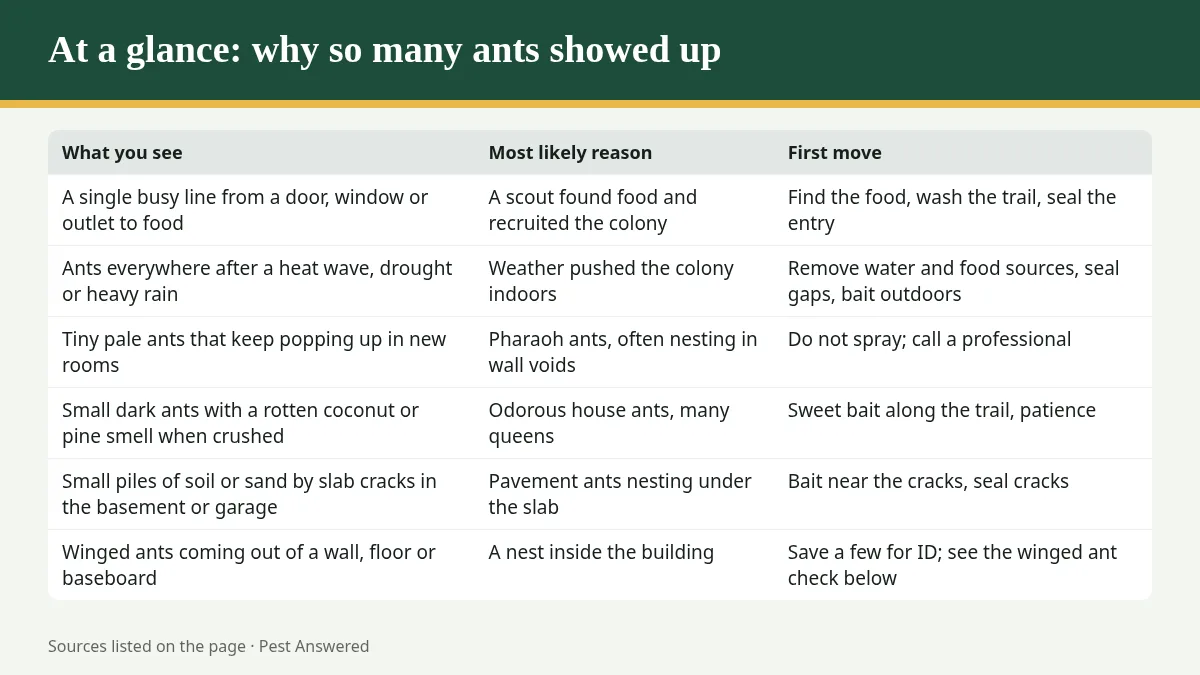 Graphic: summary of this guide, made by our team from the cited sources.
Read the crowd: what you see and what it points to
| What you see | Most likely reason | First move |
|---|---|---|
| A single busy line from a door, window or outlet to food | A scout found food and recruited the colony | Find the food, wash the trail, seal the entry |
| Ants everywhere after a heat wave, drought or heavy rain | Weather pushed the colony indoors | Remove water and food sources, seal gaps, bait outdoors |
| Tiny pale ants that keep popping up in new rooms | Pharaoh ants, often nesting in wall voids | Do not spray; call a professional |
| Small dark ants with a rotten coconut or pine smell when crushed | Odorous house ants, many queens | Sweet bait along the trail, patience |
| Small piles of soil or sand by slab cracks in the basement or garage | Pavement ants nesting under the slab | Bait near the cracks, seal cracks |
| Winged ants coming out of a wall, floor or baseboard | A nest inside the building | Save a few for ID; see the winged ant check below |
Size matters too. Ants about 1/16 inch long point to a different species, and a different plan, than ants a quarter inch or longer.
The ants on your counter are a small slice of the colony
Every extension source we checked makes the same point in a different way. Kentucky says the ants foraging on exposed surfaces are only a small portion of the colony. UC IPM says only about 10% of carpenter ants are out foraging at any one time. Ohio State says about 90 percent of a Pharaoh ant colony stays hidden in the nest, and that its colonies can grow to 300,000 or more members.
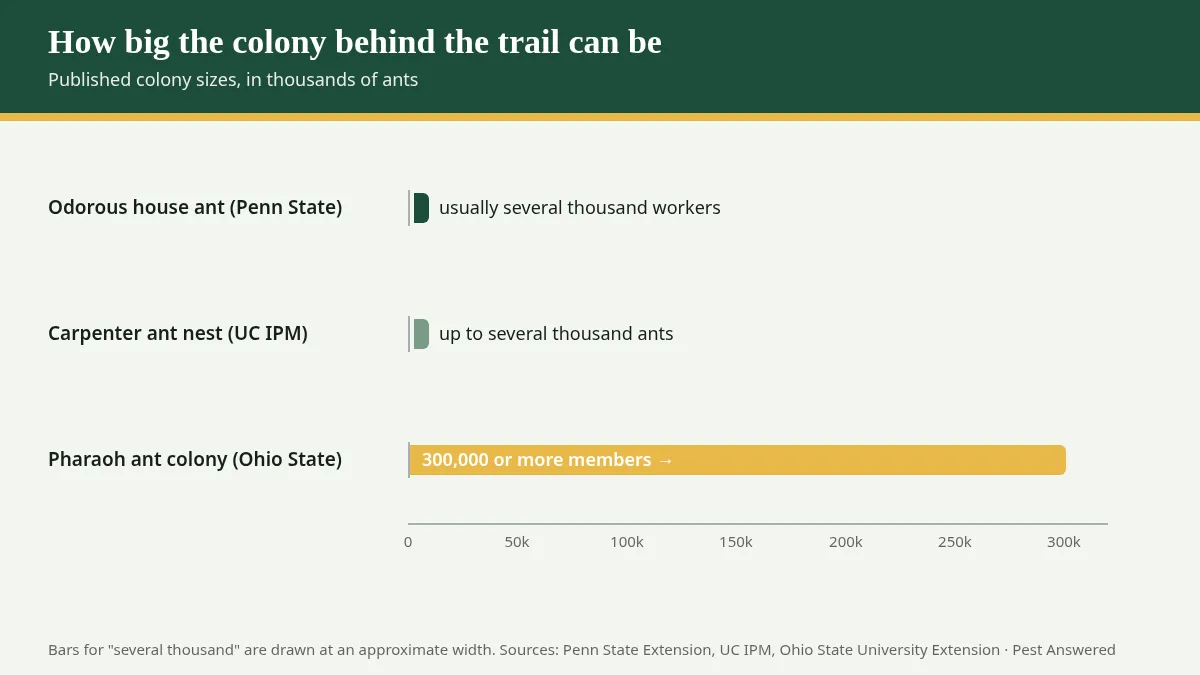 Graphic: made by our team from Penn State, UC IPM, Ohio State and University of Kentucky Extension figures (linked on this page).
That is why a bigger crowd tomorrow is normal after you kill today's ants. The colony simply sends more workers down the same trail.
Six reasons the numbers jump
1. A scout found something and laid a trail. Ants lay invisible odor trails that the workers follow between food and the nest, Kentucky explains. UC IPM's ant page says a few straggling ants are scouts searching for food or nest sites, and that long trails of thousands of ants can lead from a nest to a food source. One sticky spill can turn three scouts into a parade within hours.
2. The weather changed. UC IPM says ants come indoors seeking food and water, warmth and shelter, or refuge from dry, hot weather or flooded conditions, and that they may appear suddenly when other food sources dry up or the weather turns. This is why ant calls tend to come in waves after heat waves and storms.
3. It is their season. UC IPM advises learning the seasonal cycle of ants where you live and caulking and baiting before the yearly influx. Penn State says odorous house ant winged forms appear from May through July, and pavement ant swarmers, normally a spring event, can come out any time of year in heated buildings, even late fall into February.
4. The species has many queens. Some ants are built for big numbers. Penn State says odorous house ant colonies usually hold several thousand workers with many queens, and Kentucky adds that these colonies may split into smaller ones and move quickly when the weather changes or they are disturbed. UC IPM describes Argentine ant colonies linking into one large supercolony with multiple queens. Ohio State's Pharaoh ant fact sheet describes "budding," where a queen and a few workers carrying brood walk off to start a new colony elsewhere in the building.
5. The nest is already inside. Kentucky lists wall voids, the spaces behind cabinets and appliances, door and window frames, and under floors and slabs as indoor nest sites, and says an indoor swarm of winged ants means a nest is present. UC IPM says Pharaoh ants nest in warm, moist spots such as wall voids, under flooring and near hot water pipes or heating systems. Penn State notes odorous house ants nest indoors near moisture and warmth.
6. Somebody sprayed. UC IPM says spraying ants indoors will not stop more from coming in, perimeter sprays kill only foragers, and barrier sprays can make things worse by trapping ants indoors. Ohio State says repellent sprays such as pyrethroids can move Pharaoh ant colonies and spread them through a building, and that bug bombs do not reach the colonies. Budding, it says, can be triggered by overcrowding, seasonal heating and cooling changes, or a repellent pesticide.
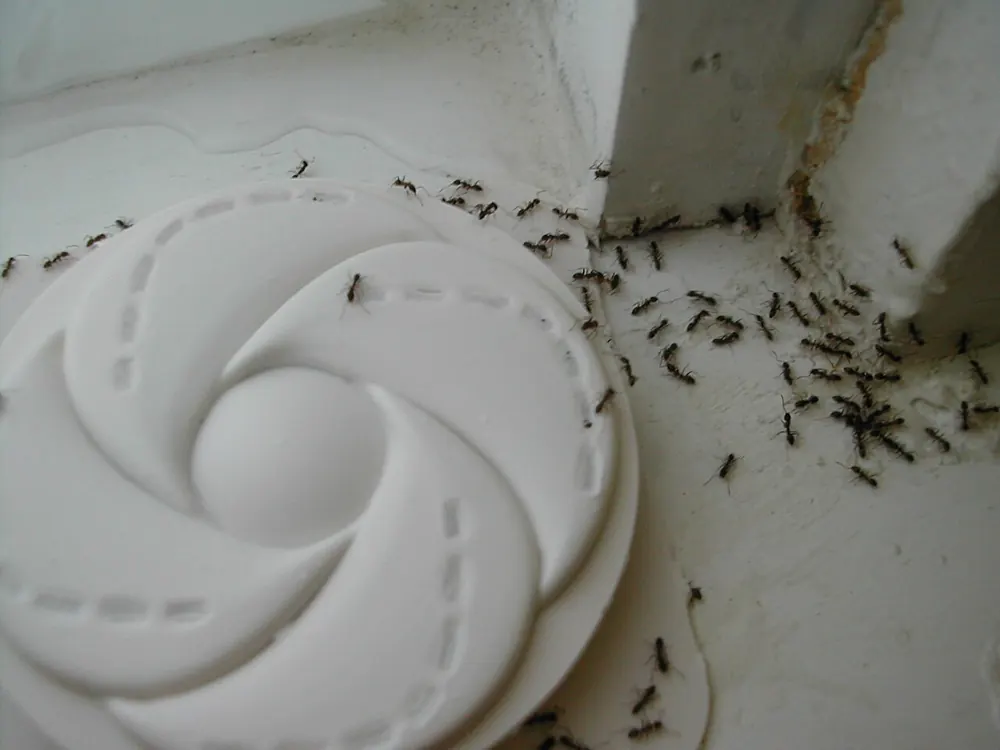
Which ant is it?
| Ant | Size and look | Why the numbers get big | Where to look |
|---|---|---|---|
| Odorous house ant | 1/16 to 1/8 inch, brown to black, rotten coconut or pine smell when crushed | Many queens; colonies split and relocate | Near moisture and warmth, wall voids, potted plants |
| Pavement ant | 2.5 to 4 mm, dark brown to black | Colonies under slabs and sidewalks; swarmers indoors in heated buildings | Soil piles at slab cracks, basements, garages |
| Argentine ant | About 1/8 inch, dull brown | Supercolonies with multiple queens | Trails along edges toward sweets and water |
| Pharaoh ant | About 1/16 inch, yellow to orange | Several queens, budding, up to 300,000 or more | Wall and cabinet voids, near hot water pipes |
| Carpenter ant | 1/4 to 1/2 inch, black or red and black | Satellite nests indoors linked to a parent nest outside | Wet or decayed wood, wall voids, hollow doors |
Sizes and traits are from UC IPM, Kentucky (the odorous house ant smell), Penn State's odorous house ant guide, Penn State's pavement ant guide and Ohio State. Kentucky suggests putting a few wingless workers in a bag or vial so an extension office or pest professional can confirm the species.
If the crowd is concentrated in one wet room, our guide to ants that show up only in the bathroom covers drains, grout and pipe gaps. If they keep turning up on sheets and pillows, see why ants get into a bed when there is no food.
Large black ants or winged ants: check before you treat
UC IPM's carpenter ant page says carpenter ants do not eat wood but dig nests in it, often starting where wood is wet or decayed, and that the nests inside a house are usually satellites of a parent nest outdoors in a tree, stump or woodpile. Their sawdust is fibrous, unlike the six-sided pellets of drywood termites.
Winged insects need a quick look. UC IPM and Kentucky both describe the differences: ants have a pinched waist, elbowed antennae and front wings longer than the hind wings, while termites have a thick waist, straight antennae and four wings of equal length. UC IPM adds that both shed their wings shortly after flying.
What to do this week
- Put the spray down. Kentucky says treating only the ants you see usually fails, and UC IPM warns indoor sprays will not keep more ants out.
- Follow the line. Kentucky's trick: put a dab of honey or jelly on an index card next to the ants, then watch where the fed ants go. That shows you the entry point or nest.
- Wash the trail. UC IPM says a sponge and soapy water remove the scent trail, especially at entry points. The NPIC ant page also suggests vacuuming ants and emptying the bag or bin outdoors right away.
- Take away the reason they came. Store food in hard, sealed containers, not bags or cardboard, and keep sugar and honey in the fridge (NPIC). Fix leaky faucets, pipes and sprinklers, and empty the trash often (UC IPM).
- Bait, by the label. UC IPM says baits work because workers carry the slow-acting product back to the nest, where the whole colony, including queens, can be killed. Do not spray near baits. Read the label first; it is the law, and the ant you have should be listed. Our page on how long ant baits take to work has the timelines.
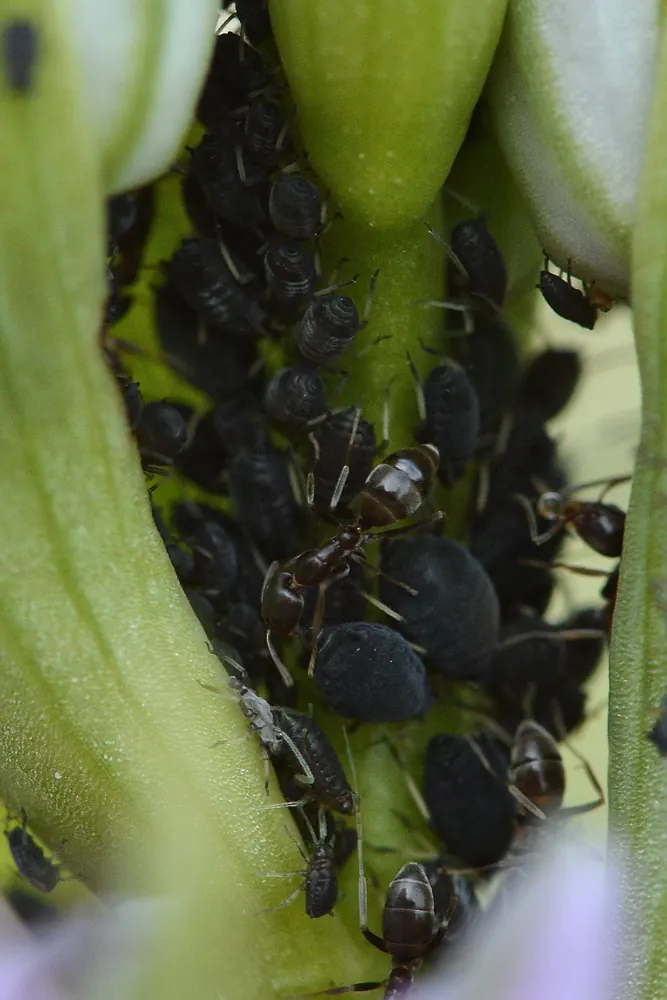
- Close the door behind them. Caulk the cracks you found in step 2. Keep plants, grass and mulch at least a foot from the foundation, and deal with aphid-covered shrubs next to the house (UC IPM). For an infested potted plant, NPIC describes a moat: set the pot in a larger bowl of water with detergent.
When to call a pest professional
- The ants are tiny and pale and keep appearing in new rooms. Ohio State says Pharaoh ant treatment is best left to commercial applicators who understand baiting.
- Large black ants with sawdust-like debris near damp wood, which can mean a carpenter ant nest in the structure.
- Winged insects coming out of walls or floors and you are not sure whether they are ants or termites.
- Two weeks of steady, label-following baiting has not cut the numbers. Kentucky says persistent ant problems may need a professional.
- Fire ants inside, or anyone in the home is allergic to stings.
Ask any company you hire for baits and spot treatments rather than routine perimeter sprays, which is what UC IPM recommends.
Frequently asked questions
Why do I suddenly have so many ants after it rains?
UC IPM lists flooded conditions, along with hot dry weather, as a reason ants move into buildings, and says they can show up suddenly when weather changes or their usual food runs out. A rainy week can send a whole colony looking for dry ground.
If I kill the ants I can see, will more come?
Usually, yes. The University of Kentucky says the foragers on your counter are only a small part of the colony, with thousands more ants and one or more queens hidden in the nest, so wiping out the visible ones rarely ends the problem.
Does a big ant problem mean there is a nest inside my walls?
Not always. Kentucky notes that ants seen indoors often come from nests outside. Winged ants coming out indoors are the clearer sign: Kentucky says an indoor swarm means a nest is present in the building.
How long until the numbers drop once I start baiting?
UC IPM says it can take 5 to 10 days to see fewer ants at bait stations, and Penn State says odorous house ant baiting can take two weeks or longer.
Sources
- Ant Control for Householders (ENTFACT-619), University of Kentucky Entomology
- Ants, UC Statewide IPM Program
- Carpenter Ants, UC Statewide IPM Program
- Pharaoh Ant (HYG-2136), Ohio State University Extension
- Odorous House Ant, Penn State Extension
- Pavement Ant, Penn State Extension
- Ants, National Pesticide Information Center (NPIC)
Spotted an error? See our corrections policy or email contact@pestanswered.com.

Pest Answered Editorial Team
Our editors research each guide from the listed sources and check every claim before publishing. Editorial policy
Emanuel Jaramillo
Expert Contributor, Pest Control
Emanuel Jaramillo has 12 years of hands-on pest control experience and is bilingual in English and Spanish. He contributes field tips and reviews our practical guides on pest signs, identification, prevention and…
Related guides
-
 Ants
How Long Do Ant Traps Take to Work? Real Timelines From Extension Experts
Most ant bait stations cut ant numbers in about 5 to 10 days, but some ants take two weeks or more and fire ant baits can take weeks to months. Timelines, why you see more ants first, and fixes.
-
 Ants
Why Are There Ants Only in My Bathroom? What It Usually Means
Ants that show up only in a bathroom are usually after water, warmth or the pipe runs they travel along. How to tell which ant it is, what to check, and when winged ones mean termites.
-
 Ants
Ants in Your Bed but No Food? Why They Come and How to Stop Them
Ants in a bed with no food are usually after water, warmth or a nest site, or are scouts from a colony in the wall. How to tell which ant you have and stop them, with UC IPM, NPIC and Penn State sources.
-
 Mice & Rats
When Do Mice Come Out? Night, Dusk and Before Dawn, and What a Daytime Mouse Means
House mice are most active at night, with feeding peaks at dusk and just before dawn. Why you sometimes see them in daylight, what time of year they move indoors, and when to set traps.