Mouse in the Wall? How to Confirm It and Get It Out Without Opening the Wall
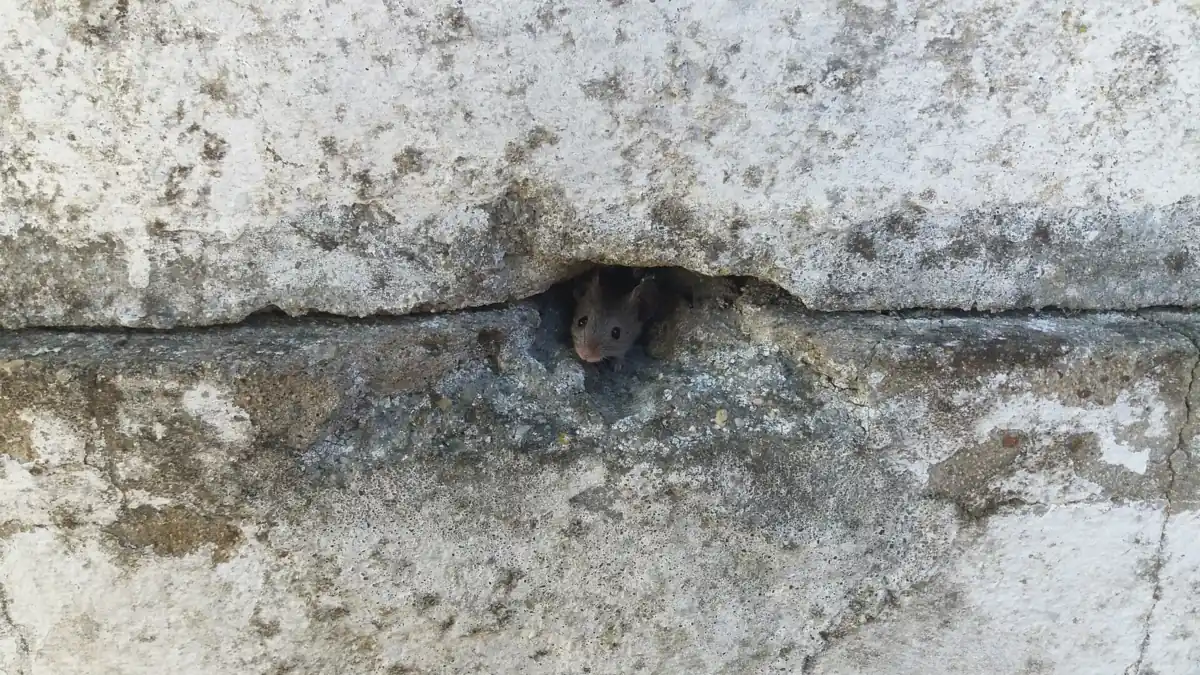
If you hear light scratching, skittering or gnawing inside a wall at night, a house mouse is the most common cause. You can usually get it out without opening the wall: find where it leaves the wall to feed, trap it there, then seal the gaps so no more come in. Skip poison. Poisoned mice often die in hard-to-reach places and cause a bad smell (NY DOH).
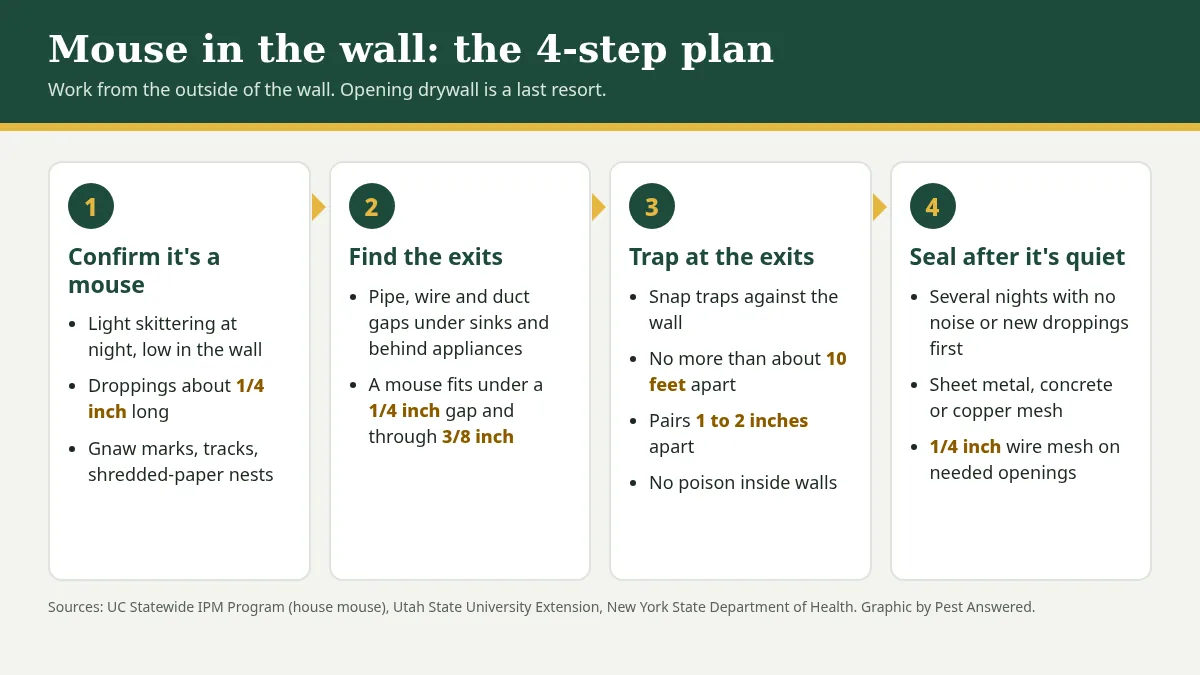 Graphic: the four steps in this guide, made by our team from the UC IPM, Utah State and New York State Department of Health sources cited below.
Step 1: Confirm it is a mouse
Noise alone isn't proof. Utah State's school IPM manual says mice are harder to hear than rats, but you can sometimes hear them scurrying and skittering, and that squirrels and other animals make similar noises, so you should confirm with other signs (USU).
| What you notice | Points to |
|---|---|
| Light scratching and skittering at night, low in the wall or under cabinets | Mice |
| Louder gnawing, clawing and scrambling at night | Rats |
| Noise in the attic or upper walls mostly early morning and late afternoon | Tree squirrels |
| Droppings about 1/4 inch long in drawers and along baseboards | Mice |
Sources: mouse and rat noises and dropping size from USU; squirrel activity times from UC IPM Tree Squirrels.
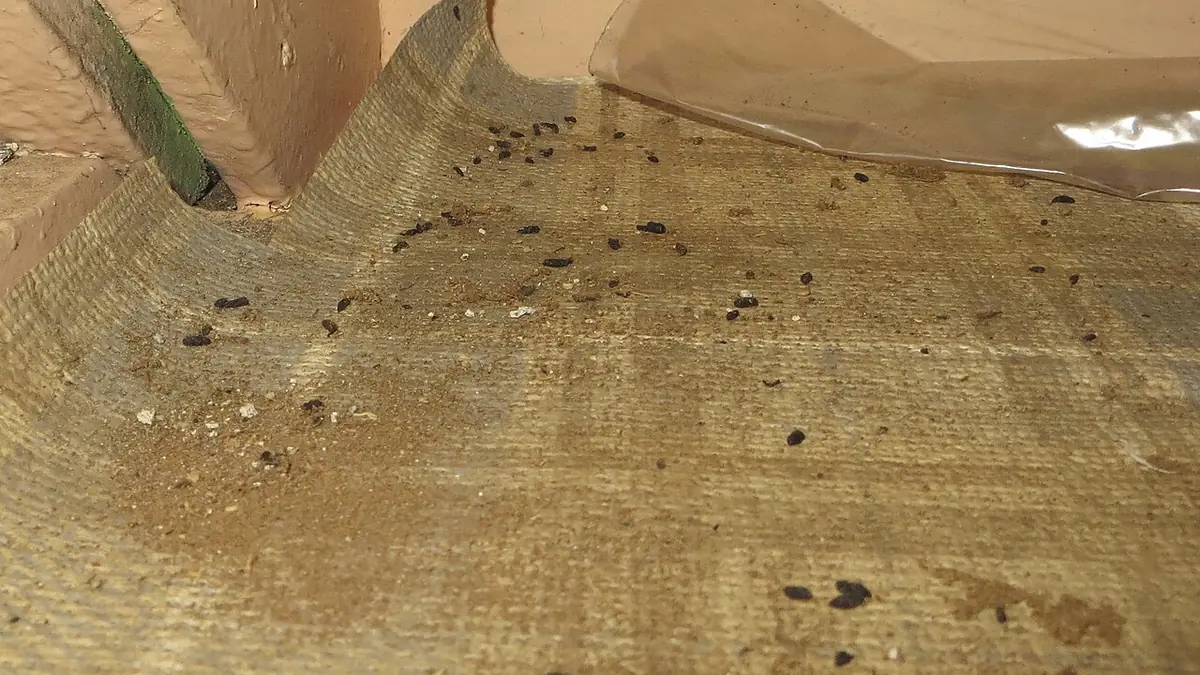
Then look for the evidence UC IPM lists for house mice: droppings, gnaw marks, tracks, a musky odor in long-term infestations, and nests of finely shredded paper (UC IPM). Check under the kitchen sink, behind the stove and fridge, and in the cabinet nearest the noise. Our guide to what mouse poop looks like helps you rule out roaches and bats.
If you hear noise but find no droppings anywhere, read why you may hear mice in the walls but see no droppings before you buy traps.
Step 2: Find where it gets in and out
Mice come out of walls through gaps where pipes, wires and ducts pass through: under sinks, behind the dishwasher and fridge, around heating pipes and at the gap under baseboards. UC IPM says a house mouse can squeeze under a gap 1/4 inch tall and through an opening 3/8 inch wide (UC IPM). Look for:
- Dark rub marks along an edge
- Droppings collected in one spot
- Fresh gnaw marks or chewed insulation near a pipe
Step 3: Trap at the exits, not inside the wall
UC IPM's trapping guidance works well here (UC IPM):
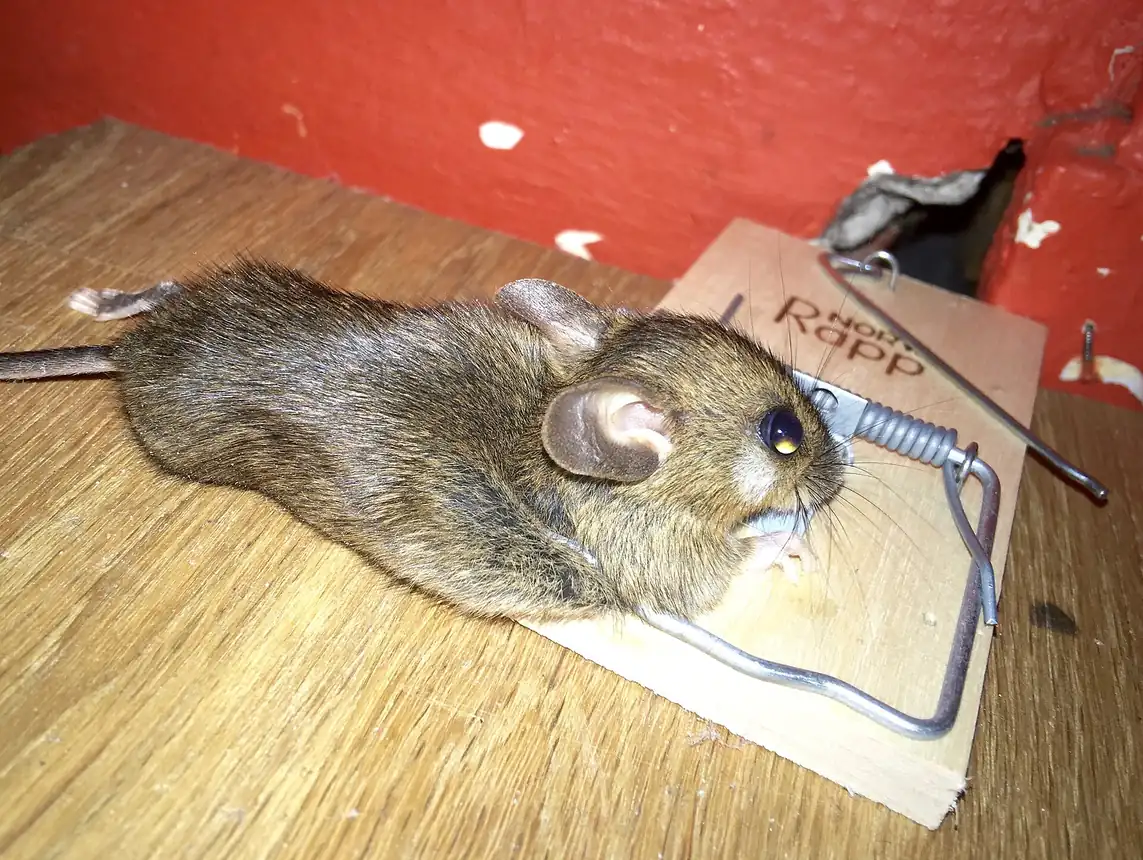
- Use plenty of snap traps. Mice rarely go more than 30 feet from their nest and food, so space traps no more than about 10 feet apart where you see activity.
- Set them close to the wall so mice pass directly over the trigger.
- Try pairs of traps set 1 to 2 inches apart to catch mice that jump over one.
- Put them behind objects and in dark corners near the exit points you found, out of reach of children and pets.
Check traps every day. UC IPM advises using enough traps to make the trapping period short and decisive; if a trap catches nothing for several nights, move it closer to fresh droppings.
Why not poison? Bait doesn't stay with the mouse. UC IPM notes that because house mice stay within about 30 feet of their nest, rodenticide will often leave mice dying inside the structure (UC IPM). For a mouse nesting in a wall, that can mean inside the wall cavity. If that already happened, see our guide on how long a dead mouse smell lasts and how to get rid of it.
What about ultrasonic plug-ins? UC IPM says ultrasonic sound is directional, doesn't reach behind objects, and that there is little evidence any sound, magnetic or vibration device drives established mice out (UC IPM).
Step 4: Seal the gaps after the noise stops
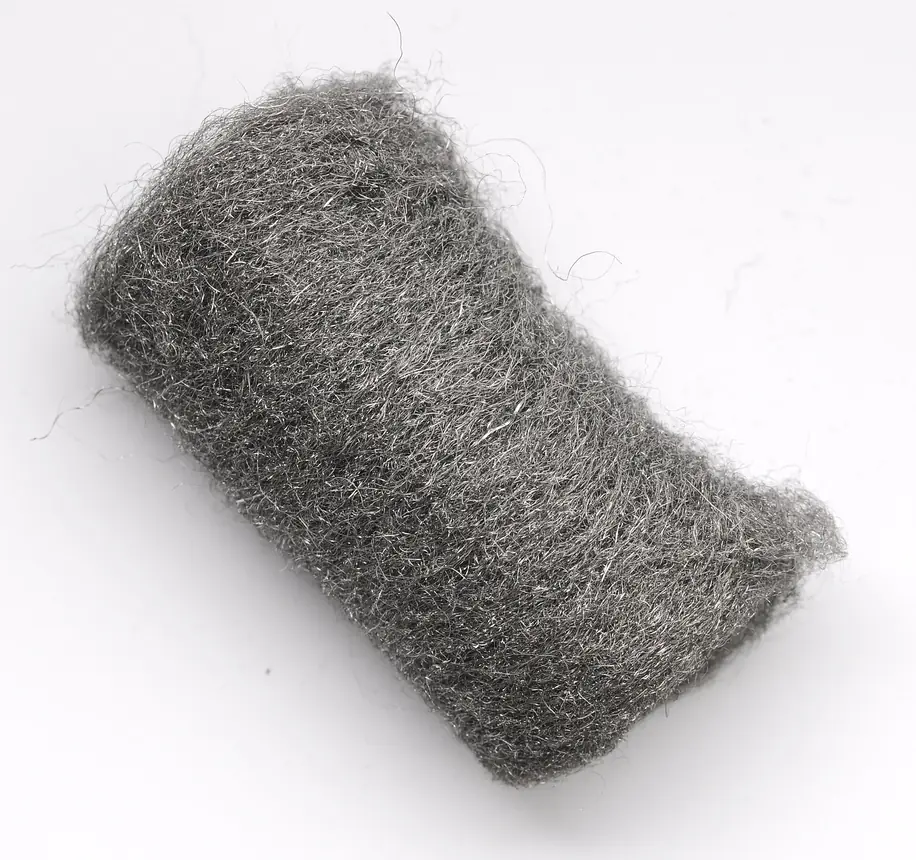
Once you have gone several nights without noise or new droppings, seal the holes. New York State recommends sheet metal, concrete or knitted copper mesh for cracks and gaps around vents, wires and pipes, 1/4-inch wire mesh over necessary openings, and tight door sweeps on exterior doors (NY DOH). Sealing before the mice are gone can trap one inside the wall.
When to open the wall or call someone
Call a pest professional if you hear noise in several rooms, keep catching mice for more than two or three weeks, or suspect rats. Opening drywall is a last resort, usually only to remove a dead animal that has a smell you can pin to one spot. Clean droppings and nests with the CDC method: wet them with disinfectant first and never sweep or vacuum them dry (CDC).
Frequently asked questions
Will a mouse in the wall leave on its own?
Rarely. House mice stay within about 30 feet of their nest and food, so a mouse nesting in a wall near your kitchen has no reason to leave.
Should I put poison in the wall?
No. The New York State Department of Health says poisoned mice often die in hard-to-reach places and cause a strong odor. Trapping is safer.
Do I need to cut a hole in the wall?
Usually not. Mice leave the wall to feed, so traps set where they come out, and sealing the gaps afterward, solve most cases.
Could the noise be something other than mice?
Yes. Utah State Extension notes that squirrels and other animals make similar noises, so confirm with droppings, gnaw marks or tracks before you treat.
Sources
- Pest Notes: House Mouse, UC Statewide IPM Program
- IPM for Rats and Mice (School IPM manual, 2012), Utah State University Extension
- Mice and Rats (Publication 3206), New York State Department of Health
- Pest Notes: Tree Squirrels, UC Statewide IPM Program
- How to Clean Up After Rodents, CDC Healthy Pets, Healthy People
Spotted an error? See our corrections policy or email contact@pestanswered.com.

Pest Answered Editorial Team
Our editors research each guide from the listed sources and check every claim before publishing. Editorial policy

Expert review in progress
This guide has not yet been reviewed by a pest control professional. We will add the reviewer’s name and the review date here once that is done.
Related guides
-
 Mice & Rats
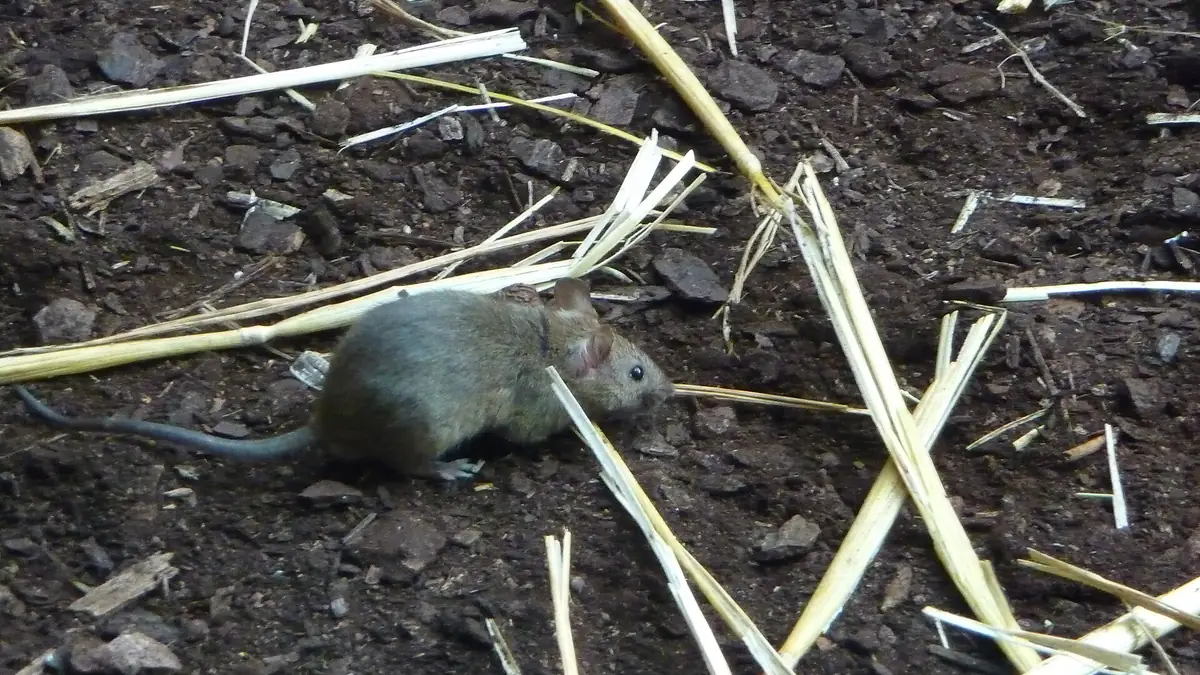
Can Mice Climb Walls? Yes. Here's What They Can and Can't Climb
Yes, house mice climb any rough wall: brick, wood, concrete, siding. See what they can't grip, how high they jump, and how to block their routes.
-
 Mice & Rats
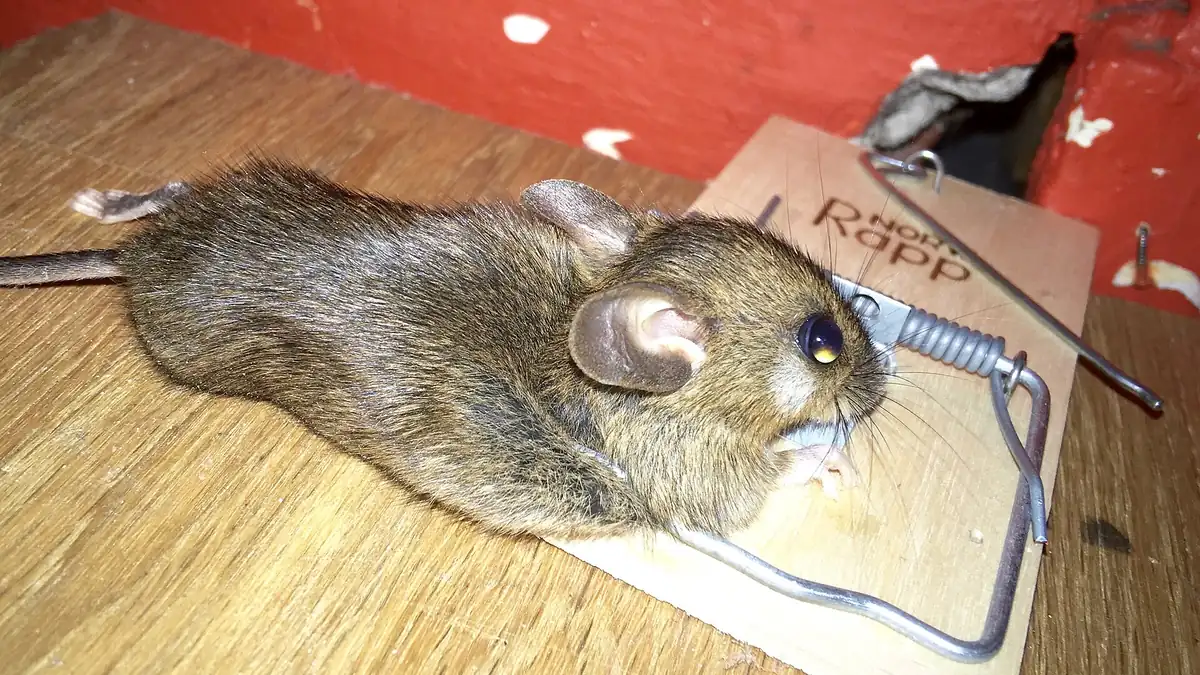
Dead Mouse Smell: How Long It Lasts and How to Get Rid of It
A dead mouse smell usually fades once the body dries out, in about a few weeks. How to find the source, clean up safely per CDC, and what not to do.
-
 Mice & Rats
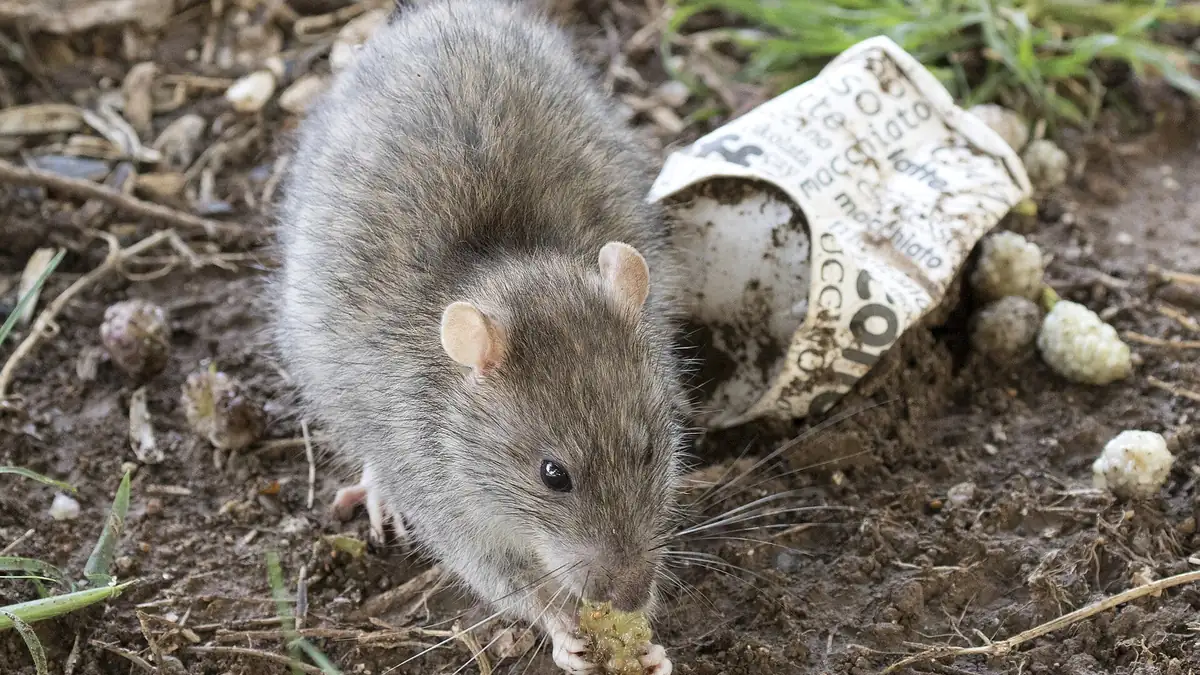
Mouse vs Rat: How to Tell the Difference (Size, Droppings, Signs)
Mice are small (about 3 in plus tail) with big ears; rats are much bigger with blunter snouts. Compare size, droppings, gnaw marks and why it matters.
-
 Mice & Rats
What Does Mouse Poop Look Like? Size, Shape, and Look-Alikes
Mouse droppings are smooth, dark and 1/8 to 1/4 inch long with pointed ends, like a grain of rice. How to tell them from rat, roach and bat droppings, and how old they are.