What Does Mouse Poop Look Like? Size, Shape, and Look-Alikes
Mouse poop is small, smooth and dark, about 1/8 to 1/4 inch long, with at least one pointed end. Most sources compare it to a grain of rice (NPS; Cornell IPM). You usually find many of them scattered along walls, in drawers and behind appliances, because one mouse can leave 50 to 75 pellets a day (NPS).
Don't sweep or vacuum them up while you investigate. The CDC says dry sweeping can put virus-carrying particles into the air; wet them with disinfectant first (CDC).
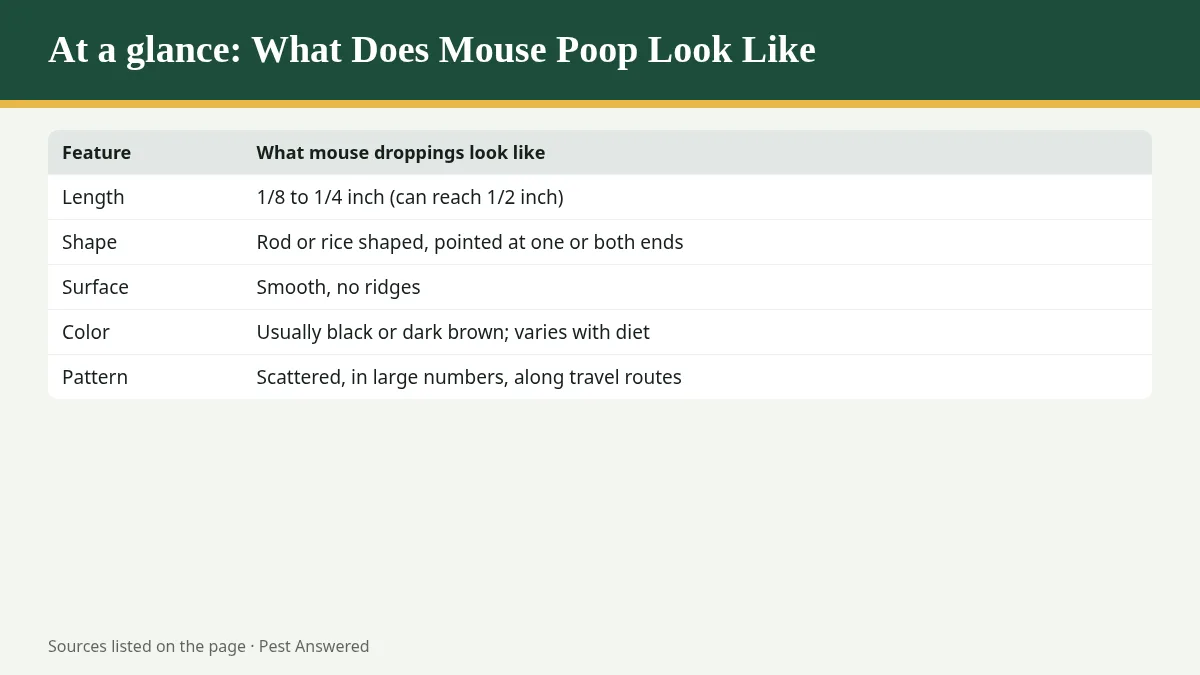 Graphic: summary of this guide, made by our team from the cited sources.
Mouse droppings at a glance
| Feature | What mouse droppings look like | Source |
|---|---|---|
| Length | 1/8 to 1/4 inch (can reach 1/2 inch) | Cornell IPM; USU |
| Shape | Rod or rice shaped, pointed at one or both ends | NPS |
| Surface | Smooth, no ridges | USU |
| Color | Usually black or dark brown; varies with diet | Cornell IPM |
| Pattern | Scattered, in large numbers, along travel routes | USU |
Odd colors mean something. Cornell IPM notes that green or red droppings may mean the rodent has been eating a rodenticide bait (Cornell IPM). If you didn't put bait out, a neighbor or a previous owner may have.
Is it mouse, rat, roach or bat?
| Droppings | Size | How they differ |
|---|---|---|
| House mouse | 1/8 to 1/4 inch | Smooth, pointed ends, many scattered |
| Roof rat | about 1/2 inch | Pointed, capsule shaped |
| Norway rat | 3/4 to 1 inch | Blunt ends, thicker |
| American cockroach | smaller than mouse | Ridges along the length, blunt ends |
| Bat | similar to mouse | Crumbles into shiny insect bits when crushed |
Sources: rat and mouse sizes from Cornell IPM; cockroach ridges from NPS and USU; bat test from USU.
Mouse vs rat. Size is the giveaway. The New York State IPM Program puts the cutoff simply: mouse droppings are typically less than 1/4 inch, rat droppings larger than 1/3 inch (NYS IPM). Young rats leave smaller droppings, so a mix of small and large pellets in one spot points to rats. Our guide to telling a young rat from an adult mouse covers the other clues.
Mouse vs cockroach. Hold a magnifying glass or your phone camera close. Utah State says to look for lengthwise ridges: rodent droppings are smooth, cockroach droppings are not (USU). Small German cockroaches don't leave pellets at all; they leave dark specks and smears in corners and hinges. If that is what you are seeing, read what a cockroach nest looks like.
Mouse vs bat. Bat droppings collect in piles under a roost, often in an attic or near a gable vent. Crush one with a stick: Utah State says bat droppings contain insect fragments you can see with a hand magnifier ("look for sparkles") (USU). Mouse droppings get hard and do not crumble into shiny bits.
How old are the droppings?
Age tells you whether the mice are still there. Utah State Extension describes the change (USU):
| Age | Appearance |
|---|---|
| Fresh | Moist, soft, black or nearly black, glistening |
| A few days to a week | Dry, hard, dull rather than shiny |
| A few weeks | Mouse droppings hard, dry, dull or whitish |
Two warnings from the same manual: in warm, dry rooms droppings can lose their shine within a few hours, and very old droppings can look fresh again if they get wet. The reliable test is to clean an area and check it again in a day or two. New droppings mean current activity.
Where to look
Mice leave droppings where they travel and feed. UC IPM recommends looking for droppings, fresh gnaw marks and tracks to find active areas, and checking behind boxes, in drawers, in garages and around woodpiles for nests of shredded paper (UC IPM). Common spots:
- Along the back edge of kitchen counters and inside the cabinet under the sink
- In utensil drawers and the bottom of pantry shelves
- Behind and under the stove, refrigerator and dishwasher (pull the kick plate)
- Along basement and garage walls, and on top of the sill plate
- Inside stored boxes and around bags of birdseed or pet food
Cleaning up safely
House mice can carry diseases including leptospirosis, salmonella and lymphocytic choriomeningitis, which spreads through fresh urine, droppings and nesting material (UC IPM). Follow the CDC steps (CDC):
- Open doors and windows and leave the space to air out for 30 minutes before you start.
- Wear rubber or plastic gloves.
- Spray the droppings and the surrounding area with a disinfectant or a bleach solution (1.5 cups of bleach per gallon of water) until soaked, and let it sit 5 minutes.
- Wipe up with paper towels and put them in a covered garbage can.
- Mop or sponge the area with disinfectant, wash your gloved hands, then remove the gloves and wash your hands with soap and warm water.
If you are finding droppings week after week, the mice are getting in from somewhere. Check our notes on how high mice can climb before you seal gaps.
Frequently asked questions
How big is mouse poop?
About 1/8 to 1/4 inch long, roughly the size of a grain of rice, according to Cornell IPM and the National Park Service.
How can I tell mouse droppings from cockroach droppings?
Rodent droppings are smooth. American cockroach droppings have ridges along their length and blunt ends. Small roaches leave pepper-like specks or smears rather than pellets.
How do I know if mouse droppings are fresh?
Fresh droppings are black, soft and shiny. Utah State Extension says they dry and turn dull within a few days to a week, and become hard and whitish after a few weeks.
How many droppings does one mouse leave?
The National Park Service says a single house mouse can produce 50 to 75 pellets a day, so even a small number of mice leaves a lot of droppings.
Sources
- Mouse and Rat Biology and Behavior, Cornell University IPM
- Conserve O Gram 3/12: Identifying Mouse and Rat Damage in Museum Collections, U.S. National Park Service
- IPM for Rats and Mice (School IPM manual, 2012), Utah State University Extension
- Identifying your pest with poop, New York State IPM Program (Cornell)
- Pest Notes: House Mouse, UC Statewide IPM Program
- How to Clean Up After Rodents, CDC Healthy Pets, Healthy People
Spotted an error? See our corrections policy or email contact@pestanswered.com.

Pest Answered Editorial Team
Our editors research each guide from the listed sources and check every claim before publishing. Editorial policy

Expert review in progress
This guide has not yet been reviewed by a pest control professional. We will add the reviewer’s name and the review date here once that is done.
Related guides
-
 Mice & Rats
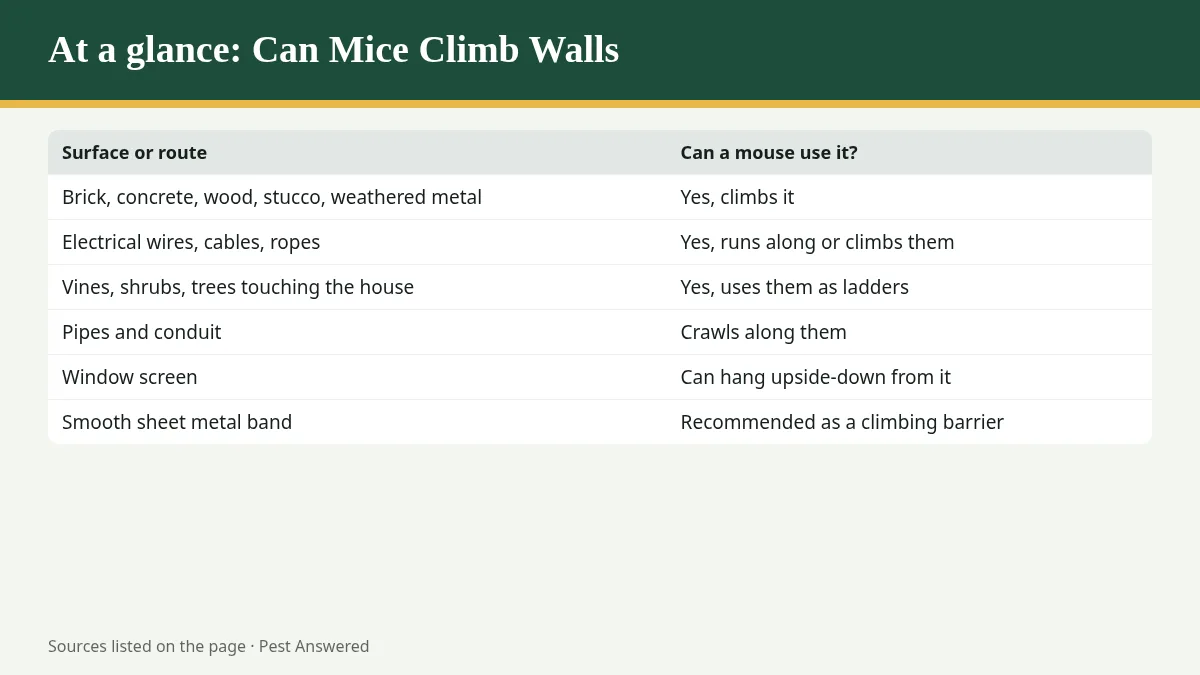
 Can Mice Climb Walls? Yes. Here's What They Can and Can't Climb
Yes, house mice climb any rough wall: brick, wood, concrete, siding. See what they can't grip, how high they jump, and how to block their routes.
-
 Mice & Rats
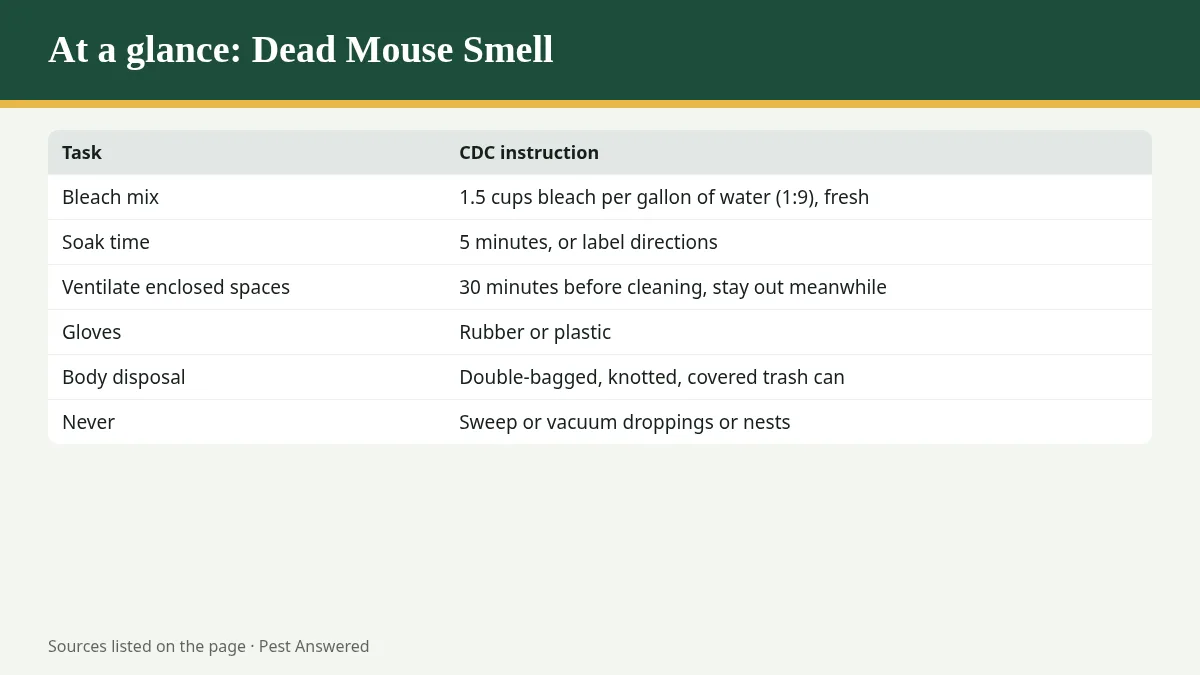
 Dead Mouse Smell: How Long It Lasts and How to Get Rid of It
A dead mouse smell usually fades once the body dries out, in about a few weeks. How to find the source, clean up safely per CDC, and what not to do.
-
 Mice & Rats
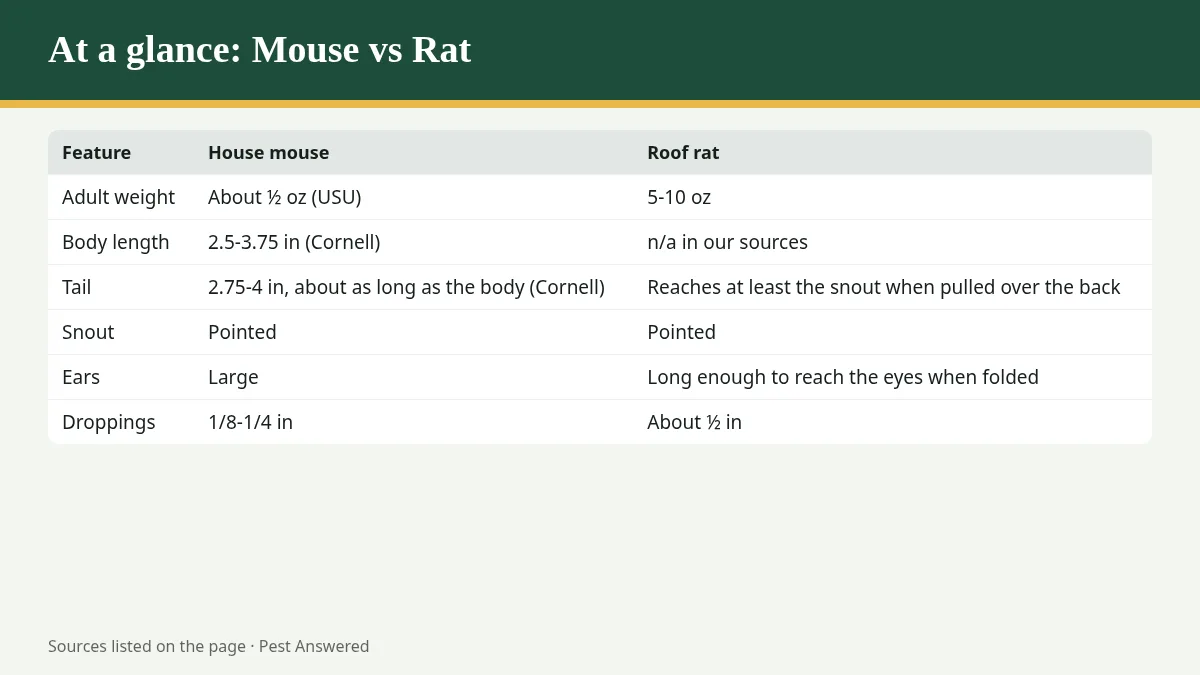
 Mouse vs Rat: How to Tell the Difference (Size, Droppings, Signs)
Mice are small (about 3 in plus tail) with big ears; rats are much bigger with blunter snouts. Compare size, droppings, gnaw marks and why it matters.
-
 Cockroaches
 Bugs That Look Like Cockroaches (and How to Tell Them Apart)
Ground beetles, wood roaches, camel crickets, water bugs and bed bugs get mistaken for cockroaches. Here's how to tell each one apart in under a minute.