What Does a Cockroach Nest Look Like? Signs, Egg Cases and Where to Look
A cockroach nest doesn't look like a nest. Roaches don't build anything. What people call a "nest" is a dark, tight space where many roaches hide together, and you recognize it by what they leave behind: dark specks and smears of droppings, shed skins, brown egg cases, and live or dead roaches (UC IPM).
These spots are usually in a crack or gap close to food, water and warmth, such as behind the fridge, under the sink, or in the back corners of kitchen cabinets.
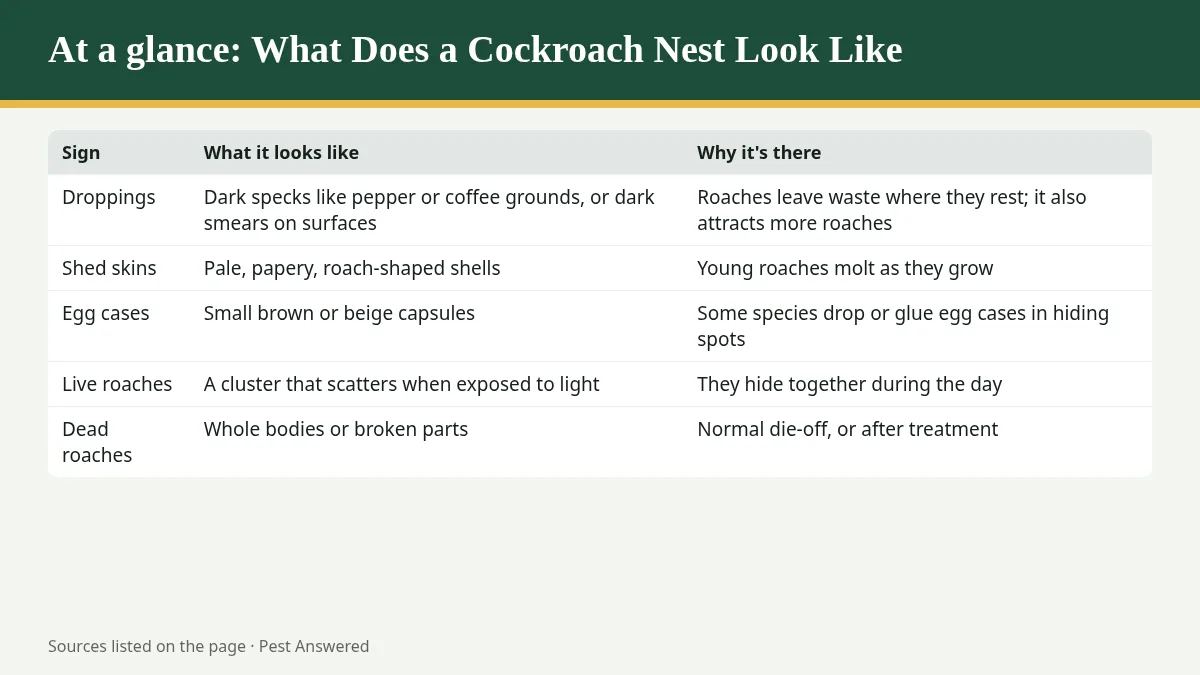 Graphic: summary of this guide, made by our team from the cited sources.
What you'll see at a roach hiding spot
UC IPM lists the signs that mark where roaches gather: "accumulations of fecal matter (e.g., dark spots or smears), cast skins, egg cases, and live or dead cockroaches" (UC IPM).
| Sign | What it looks like | Why it's there |
|---|---|---|
| Droppings | Dark specks like pepper or coffee grounds, or dark smears on surfaces | Roaches leave waste where they rest; it also attracts more roaches |
| Shed skins | Pale, papery, roach-shaped shells | Young roaches molt as they grow |
| Egg cases | Small brown or beige capsules | Some species drop or glue egg cases in hiding spots |
| Live roaches | A cluster that scatters when exposed to light | They hide together during the day |
| Dead roaches | Whole bodies or broken parts | Normal die-off, or after treatment |
Sources: UC IPM, NC State, NPIC.
Why roaches gather in one spot
Roaches prefer tight spaces where surfaces touch them on both sides. An adult German cockroach can hide in a crack 1/16 inch wide, and young ones use even smaller cracks (UC IPM). NPIC says tight cracks ⅜ inch or smaller are suitable hiding places (NPIC).
Their droppings act like a sign that says "roaches live here." NC State explains that German cockroach aggregation is "largely controlled and influenced by fecal compounds resulting in attraction and arrestment in all life stages," with more than 40 chemical cues involved (NC State). NPIC puts it simply: "Cockroaches are attracted to their own debris" (NPIC).
That's why the specking gets heavier over time in the same spots, and why cleaning the debris matters.
Cockroach droppings up close
- Small roaches (German, brownbanded): dark specks, like ground pepper, often in a cluster near a crack, hinge or corner. On light surfaces they can look like dark smears.
- Large roaches (American, oriental): small dark pellets. Cornell IPM notes American cockroach droppings have vertical lines, which rodent droppings don't (Cornell IPM). If you can't tell roach droppings from mouse droppings, that ridge is the tell. See mouse vs rat droppings for rodent sizes.
UC IPM says to look for fecal specks "under kitchen counters, behind kitchen drawers, and in the back of cabinets," and notes these deposits contain a natural aggregation pheromone (UC IPM).
Egg cases by species
Roach eggs come in a protective case called an ootheca. The case's size, color and where you find it help identify the species.
| Species | Egg case | Where it ends up | Young per case | Source |
|---|---|---|---|---|
| German | Light beige, about ¼ in (NC State: 8 mm) | Carried by the female until 1-2 days before hatching | About 30 (UC IPM); mean 40 eggs (NC State) | UC IPM, NC State |
| Brownbanded | Light brown, about ¼ in | Glued to ceilings, under furniture, in closets; sometimes in clusters | n/a in our sources | UC IPM |
| American | About ⅜ in, brown turning black in 1-2 days | Carried about 6 days, then cemented to a protected surface | About 12 | UC IPM |
| Oriental | Dark red-brown, about ⅜ in | Dropped in debris or food in sheltered places | n/a in our sources | UC IPM |
Two practical points:
- You'll rarely find loose German egg cases, because the female carries hers. If you see a small roach with a light tan capsule sticking out of its rear end, that's a German cockroach about to add a batch of young. UC IPM says a single German female and her offspring can produce over 30,000 roaches in a year (UC IPM).
- Empty egg cases still count. Even after the young have hatched, the cases show where roaches have been breeding, even if you don't see live ones.
How fast a hiding spot fills up
A small German cockroach problem becomes a large one quickly. NC State says it takes 70 to 100 days for a German cockroach to go from egg to adult, and a female produces 5 to 8 egg cases, about 200 to 250 eggs in her life (NC State). NC State also notes that physical contact with other roaches speeds up nymph development (NC State), so crowded spots grow faster.
Other species are slower. UC IPM says an American cockroach female and her offspring can produce over 800 roaches in a year, an oriental female and her offspring nearly 200, and that oriental cockroaches can take 1 to 2 years or more to reach adulthood (UC IPM). That's another reason to identify the species before deciding how worried to be.
Where to look
NPIC recommends checking bathrooms, kitchens and dark places such as under cabinets, sinks and appliances, in wall voids, and on pipes (NPIC). UC IPM adds water heaters, cupboard cracks, stoves and crawl spaces (UC IPM).
Kitchen checklist
- Behind and under the refrigerator, especially near the warm motor area
- Under the sink, where pipes go through the cabinet wall
- Hinges and corners inside upper and lower cabinets
- Behind drawers (pull them out fully)
- Around the dishwasher, stove and microwave
- Gaps where the backsplash meets the counter
Bathroom and elsewhere
- Under the sink and around the toilet base
- Behind the water heater
- Inside or under furniture and behind wall art (brownbanded roaches favor these spots, per UC IPM)
- Basements, floor drains and crawl spaces for larger outdoor species
How to look
UC IPM suggests using a flashlight to inspect cracks, under counters and around water heaters, and a small mirror on a long handle for hard-to-see spots (UC IPM). Since roaches are nocturnal, a quick check a couple of hours after dark often shows where they come from. See why roaches come out at night.
Sticky traps confirm it. UC IPM recommends placing them at the junctions of floors and walls, in all corners of a room, against walls behind large appliances and in cabinets, then checking them to see where the most roaches are caught (UC IPM).
Is it a roach spot or something else?
- Bed bugs: if the dark spots are on a mattress, bed frame or sofa rather than near food and water, check for bed bugs instead. See bugs that look like cockroaches.
- Mouse droppings are larger (1/8 to 1/4 inch), rod-shaped and without ridges (Cornell IPM).
What to do once you find it
- Identify the species. UC IPM says the right control depends on the species (UC IPM). A sticky trap catch helps.
- Vacuum and clean. UC IPM says vacuuming removes roaches, shed skins and egg cases, and recommends a vacuum with a HEPA or triple filter, because airborne bits of shed skins and droppings can cause allergies (UC IPM). Wipe away specking so it stops drawing roaches back (NPIC).
- Remove food and water. Fix leaks, store food sealed, and clean up crumbs and spills (UC IPM).
- Seal cracks around cabinets, backsplashes, pipes and wires with silicone caulk, screening or copper mesh (NPIC).
- Use baits, not bombs. UC IPM says baits provide better control than sprays, and that foggers and aerosol sprays may scatter roaches without killing them. Baits may take 7 days or longer to show results (UC IPM). Place them next to the hiding spots you found, and follow the label.
- Call a professional for heavy or spreading infestations, especially German cockroaches in apartments.
Frequently asked questions
Do cockroaches build nests?
No. They don't build a structure. A 'nest' is a sheltered crack or gap where many roaches gather, marked by droppings, shed skins and egg cases.
What do cockroach droppings look like?
UC IPM describes accumulations of fecal matter as dark spots or smears. Larger roaches leave small pellets; Cornell IPM notes American cockroach droppings have vertical lines, unlike rodent droppings.
What does a cockroach egg case look like?
A small brown capsule, roughly 1/4 to 3/8 inch long depending on species. German females carry a light beige case on their abdomen; other species drop or glue theirs in hidden spots.
Should I vacuum a cockroach nest?
UC IPM says vacuuming removes roaches, shed skins and egg cases, and recommends a vacuum with a HEPA or triple filter because roach debris can trigger allergies.
Sources
- Pest Notes: Cockroaches (UC ANR Pub. 7467), UC Statewide IPM Program
- Biology and Behavior of the German Cockroach, NC State Extension
- Cockroaches, National Pesticide Information Center (NPIC)
- Mouse and Rat Biology and Behavior, Cornell IPM
Spotted an error? See our corrections policy or email contact@pestanswered.com.

Pest Answered Editorial Team
Our editors research each guide from the listed sources and check every claim before publishing. Editorial policy

Expert review in progress
This guide has not yet been reviewed by a pest control professional. We will add the reviewer’s name and the review date here once that is done.
Related guides
-
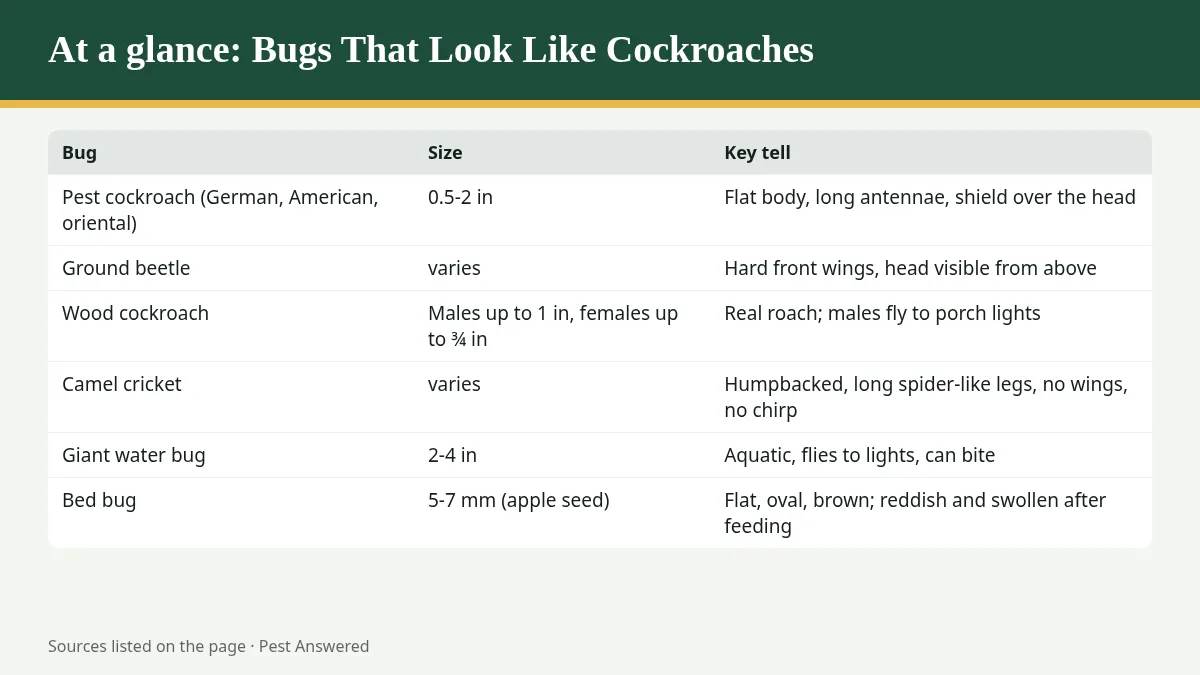 Cockroaches
 Bugs That Look Like Cockroaches (and How to Tell Them Apart)
Ground beetles, wood roaches, camel crickets, water bugs and bed bugs get mistaken for cockroaches. Here's how to tell each one apart in under a minute.
-
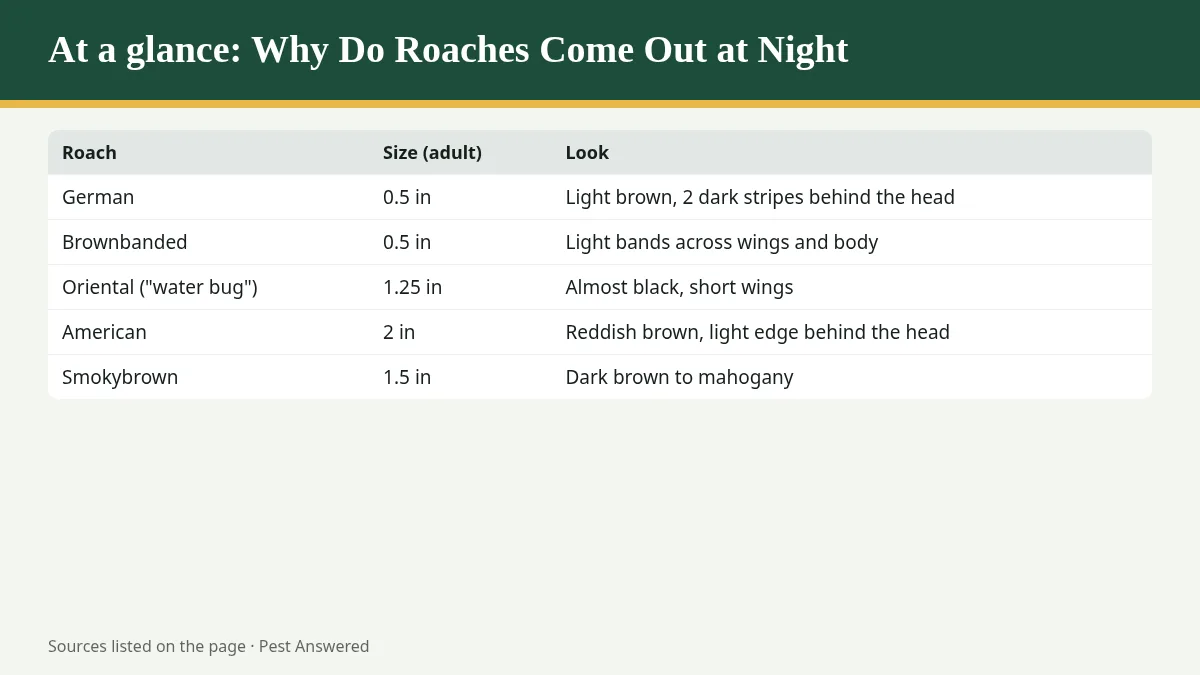 Cockroaches
 Why Do Roaches Come Out at Night? (And What a Daytime Roach Means)
Roaches come out at night because they're nocturnal: they hide in dark cracks by day and forage after dark. Here's why, and what seeing one by day means.
-
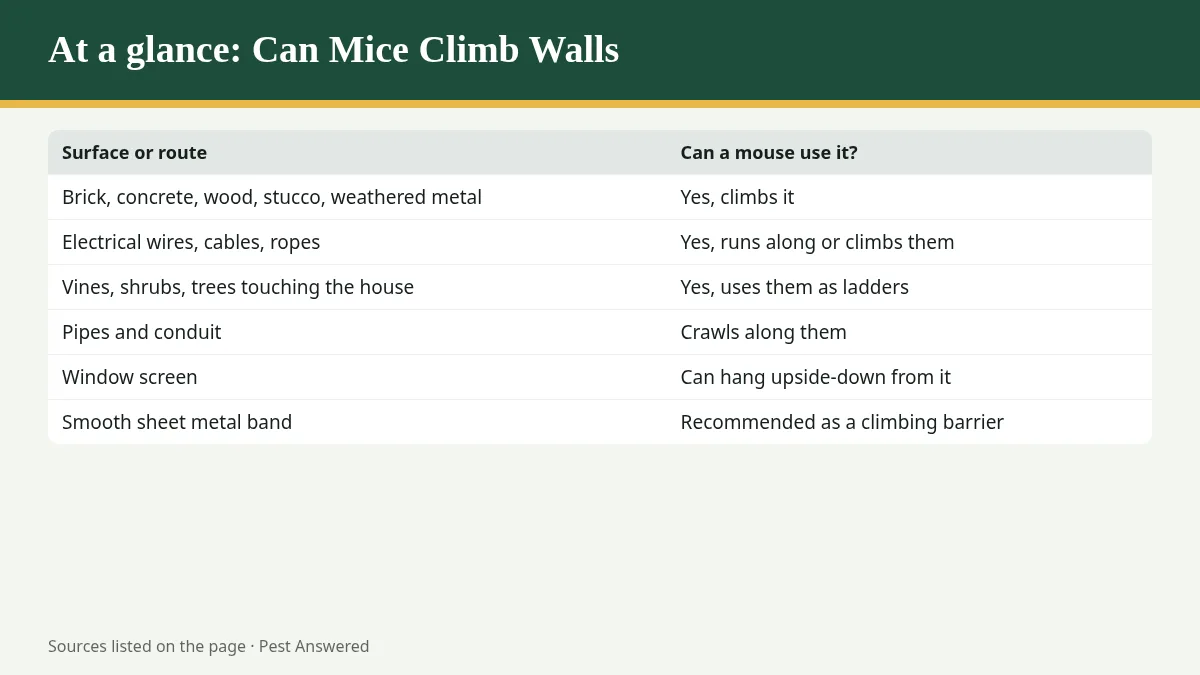 Mice & Rats
 Can Mice Climb Walls? Yes. Here's What They Can and Can't Climb
Yes, house mice climb any rough wall: brick, wood, concrete, siding. See what they can't grip, how high they jump, and how to block their routes.
-
 Mice & Rats
 Dead Mouse Smell: How Long It Lasts and How to Get Rid of It
A dead mouse smell usually fades once the body dries out, in about a few weeks. How to find the source, clean up safely per CDC, and what not to do.