Why Do Roaches Come Out at Night? (And What a Daytime Roach Means)
Roaches come out at night because almost all cockroaches are nocturnal. They spend the day packed into warm, dark, moist cracks and come out after dark to look for food, water and mates (UC IPM).
Darkness protects them. A roach in the open is exposed. A roach in a crack touching its back and belly is safe. If you are seeing roaches in daylight, that can be a sign of a bigger problem, which we cover below.
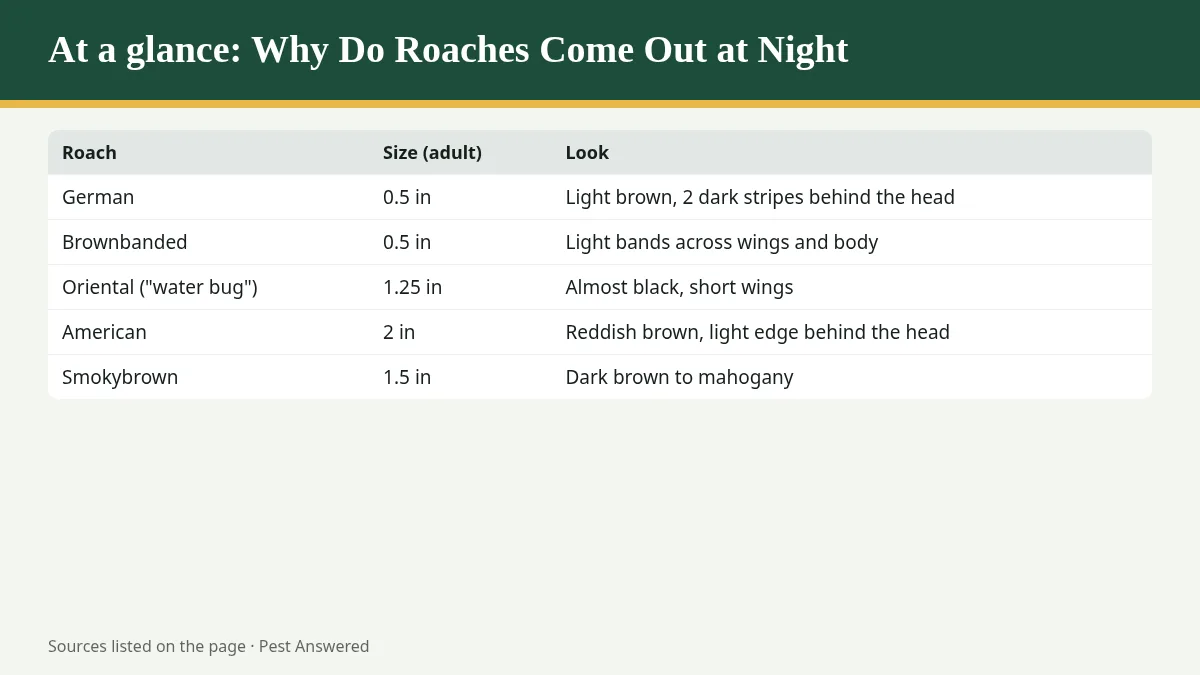 Graphic: summary of this guide, made by our team from the cited sources.
The short version
- They're wired for it. In a classic lab study, the daily activity rhythm of the oriental cockroach followed the light/dark cycle it was kept in (Journal of Experimental Biology).
- They hide by day. UC IPM says roaches hide during the day "in warm, dark, moist areas like cracks, water meter boxes, sewers, and crawl spaces" and "come out at night to feed" (UC IPM).
- They like tight spaces. Cockroaches prefer narrow spaces where surfaces touch them on both sides. An adult German cockroach can hide in a crack 1/16 inch wide (UC IPM). NPIC says tight cracks ⅜ inch or smaller are suitable hiding places (NPIC).
- Night is when the kitchen is quiet. Lights are off, people are asleep, and crumbs and dishes are often still out.
What time are roaches most active?
A classic laboratory study of the oriental cockroach, published in the Journal of Experimental Biology, found that their activity was concentrated in the first hours of darkness, soon after the lights went out. NC State describes German cockroaches the same way: they hide by day and forage at night (NC State).
That gives you a practical time to look: a couple of hours after your kitchen goes dark.
Why the dark matters to a roach
A roach out in the open is easy to spot and catch. A crack near water keeps it hidden and close to a drink. UC IPM notes that most cockroaches are tropical and like warm, dark hiding places with access to water (UC IPM).
They also gather in groups. NC State says German cockroach populations grow quickly partly because they organize around "aggregation sites" close to food and water (NC State). NPIC adds that cockroaches are attracted to their own debris, such as dead roaches, eggs and feces (NPIC). So once a hiding spot is established, more roaches use it, and they come out from it on a nightly schedule.
Which roach are you seeing at night?
The species tells you a lot about where it came from and how worried to be.
| Roach | Size (adult) | Look | Usually lives | Source |
|---|---|---|---|---|
| German | 0.5 in | Light brown, 2 dark stripes behind the head | Indoors only, kitchens and bathrooms | UC IPM |
| Brownbanded | 0.5 in | Light bands across wings and body | Indoors, warmer rooms; inside furniture, behind wall art, in closets | UC IPM |
| Oriental ("water bug") | 1.25 in | Almost black, short wings | Outdoors and damp basements, drains, garages | UC IPM |
| American | 2 in | Reddish brown, light edge behind the head | Outdoors, sewers, steam tunnels; wanders inside | UC IPM |
| Smokybrown | 1.5 in | Dark brown to mahogany | Outdoors in plantings | UC IPM |
The rough rule: a small roach (about ½ inch) at night in the kitchen is most likely German or brownbanded, which breed indoors. A big one (over an inch) is more likely an outdoor species that came in. If you aren't sure it's a roach at all, see bugs that look like cockroaches.
What it means if you see a roach in the daytime
A daytime roach isn't automatically a disaster, but it's worth taking seriously. The usual reasons:
- Crowding. NC State says German cockroaches, "though nocturnal, they occasionally appear by day if the population is too crowded" (NC State). If you see small light-brown roaches in daylight, especially more than one, assume the hiding spots are full.
- Disturbance. Moving an appliance, cleaning under the sink, or a pesticide spray can push roaches into the open. UC IPM warns that foggers, bombs and aerosol sprays "may repel and disperse cockroaches to other areas without actually killing them" (UC IPM).
- An outdoor roach wandered in. Oriental, American and Turkestan cockroaches live outdoors but can temporarily come indoors (UC IPM). One large roach near a door, drain or garage is different from a group of small ones in a kitchen cabinet.
Use the night to find them
Because roaches follow a schedule, you can use it.
The flashlight check. About 2 hours after the kitchen goes dark, walk in quietly and switch on a flashlight (not the room light). Note where they run. That's the direction of their hiding spot.
Sticky traps. UC IPM recommends placing sticky traps on the floor along wall edges, in cupboards, under appliances, near exterior doors and in all corners of a room, then checking them daily until you can tell where most roaches are being caught (UC IPM). Traps also catch a specimen you can identify.
Look for signs during the day. UC IPM lists dark spots or smears of fecal matter, cast skins, egg cases and live or dead roaches as signs of where they gather (UC IPM). NPIC suggests checking bathrooms, kitchens and dark places such as under cabinets, sinks and appliances, in wall voids and on pipes (NPIC). Our guide to what a cockroach nest looks like shows what to look for.
How to make your kitchen less inviting at night
None of this kills roaches by itself, but it removes what they come out for. These steps come from NPIC and UC IPM:
- Clean the kitchen and sink every night, and don't leave dishes with standing water (NPIC).
- Store pet food and water in sealed containers overnight (NPIC).
- Fix leaky pipes and drips (NPIC).
- Seal cracks around cabinets, backsplashes, pipes and wires with silicone caulk, screening or copper mesh (NPIC).
- Remove clutter such as paper piles and cardboard boxes, especially in kitchens and bathrooms (UC IPM).
- Clean up roach debris (dead roaches, eggs, feces), because it attracts more roaches (NPIC).
If you decide to treat
UC IPM says baits give better control than sprays, and that a bait program "may take 7 days or longer" to show fewer roaches (UC IPM). Place baits near hiding spots and fecal specks, not in the middle of the floor. NPIC reminds you to read and follow the label, and notes that some pesticides repel roaches instead of killing them, which can chase them into other rooms or apartments (NPIC).
If you see more roaches for a few days after a treatment, that's not unusual. See why you might see more bugs after pest control.
For German cockroaches in apartments, or any infestation where you see roaches in daylight, a licensed professional is usually the faster route. UC IPM says serious indoor infestations often need professional service (UC IPM).
Frequently asked questions
Are cockroaches nocturnal?
Yes. UC IPM says almost all cockroaches are nocturnal. They hide in warm, dark, moist cracks by day and come out at night to feed.
What does it mean if I see a cockroach during the day?
For German cockroaches, NC State says they sometimes appear by day when the population is too crowded. It can also mean something disturbed their hiding spot, or an outdoor roach wandered in.
Does leaving a light on keep roaches away?
No source we found shows that a light prevents an infestation. Roaches avoid open, lit spaces, but they just wait in their hiding spots and forage when it's dark.
What time are roaches most active?
In the first few hours of darkness. A classic lab study of oriental cockroaches found activity concentrated soon after the lights went out, and extension sources describe roaches as night foragers.
Sources
- Pest Notes: Cockroaches (UC ANR Pub. 7467), UC Statewide IPM Program
- Biology and Behavior of the German Cockroach, NC State Extension
- Cockroaches, National Pesticide Information Center (NPIC)
- The daily rhythm of activity of the cockroach Blatta orientalis, Journal of Experimental Biology
Spotted an error? See our corrections policy or email contact@pestanswered.com.

Pest Answered Editorial Team
Our editors research each guide from the listed sources and check every claim before publishing. Editorial policy

Expert review in progress
This guide has not yet been reviewed by a pest control professional. We will add the reviewer’s name and the review date here once that is done.
Related guides
-
 Cockroaches
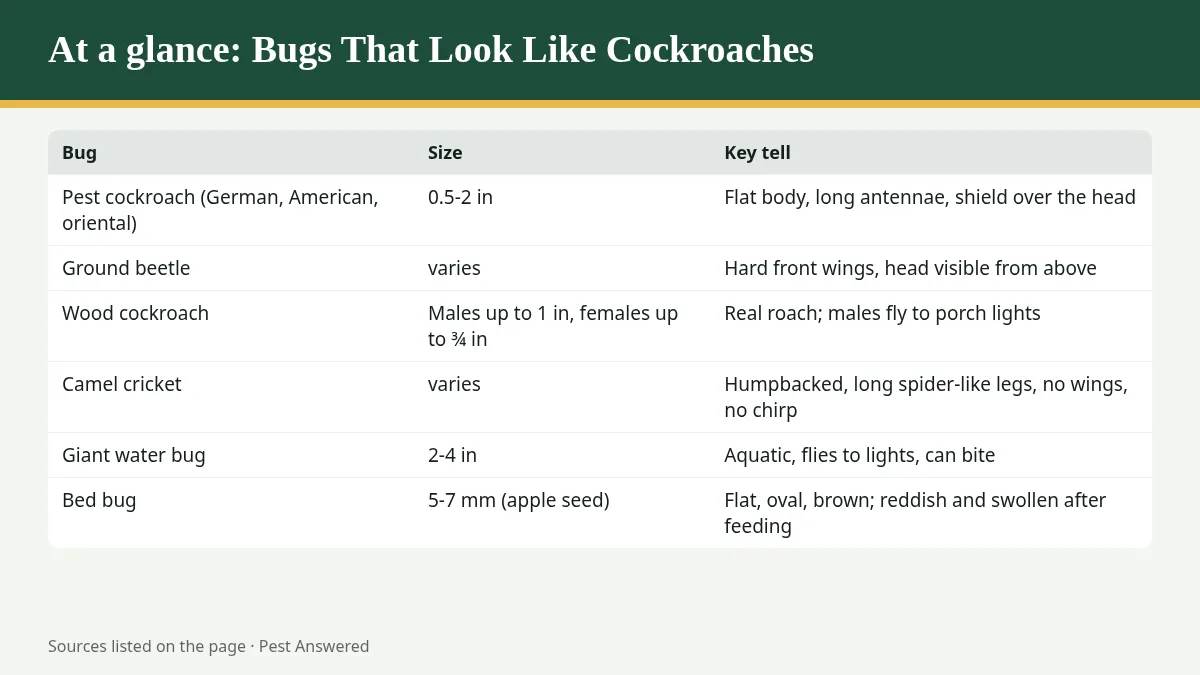
 Bugs That Look Like Cockroaches (and How to Tell Them Apart)
Ground beetles, wood roaches, camel crickets, water bugs and bed bugs get mistaken for cockroaches. Here's how to tell each one apart in under a minute.
-
 Cockroaches
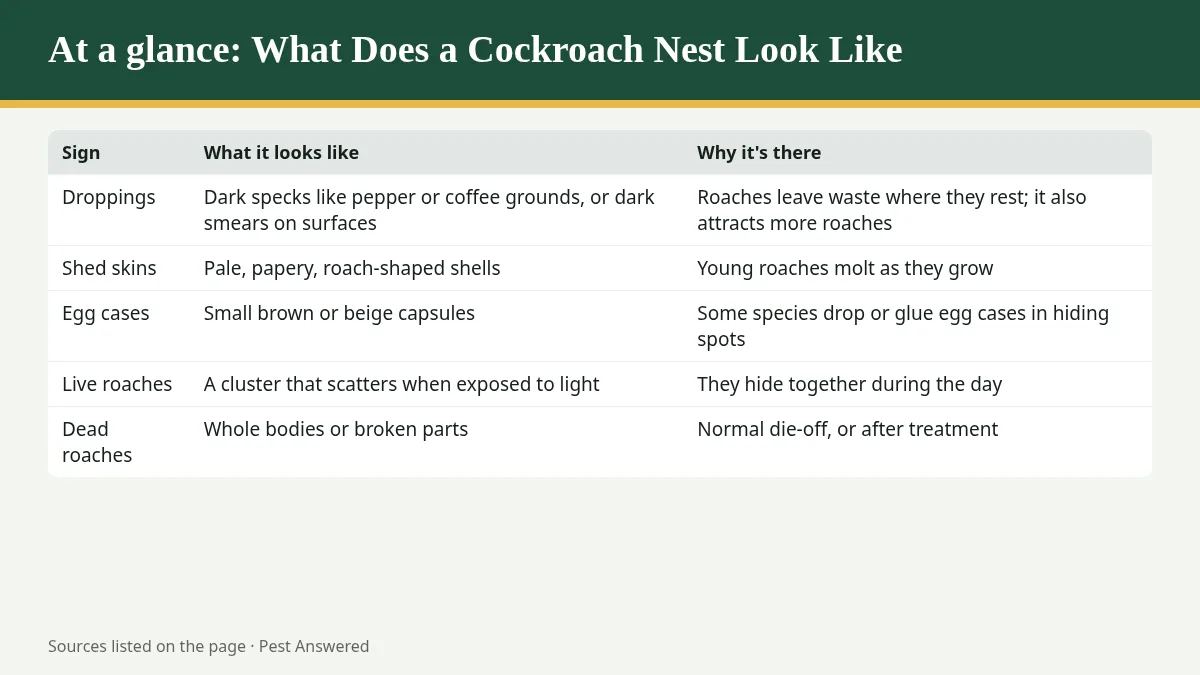
 What Does a Cockroach Nest Look Like? Signs, Egg Cases and Where to Look
A cockroach nest isn't built. It's a crack crowded with roaches, dark droppings, shed skins and egg cases. What each sign looks like and where to look.
-
 Mice & Rats
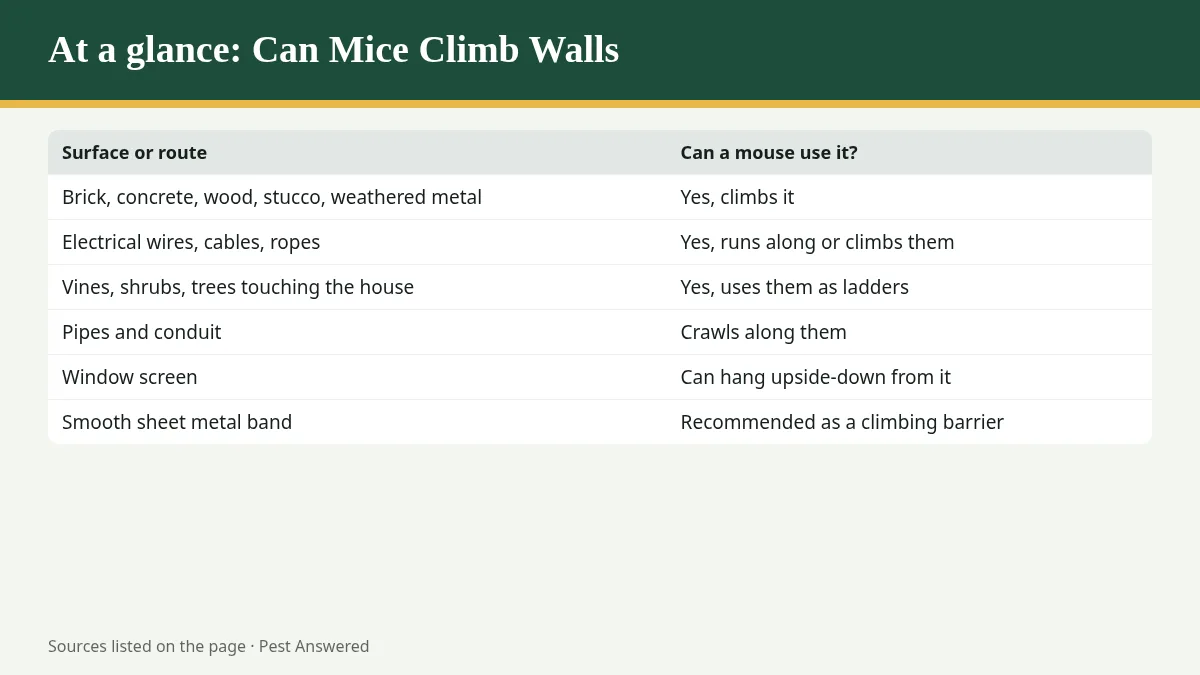
 Can Mice Climb Walls? Yes. Here's What They Can and Can't Climb
Yes, house mice climb any rough wall: brick, wood, concrete, siding. See what they can't grip, how high they jump, and how to block their routes.
-
 Mice & Rats
 Dead Mouse Smell: How Long It Lasts and How to Get Rid of It
A dead mouse smell usually fades once the body dries out, in about a few weeks. How to find the source, clean up safely per CDC, and what not to do.