Why Am I Seeing More Bugs After Pest Control? What's Normal and What Isn't
Seeing more bugs after pest control is often a sign the treatment is working. Some insecticides drive insects out of their hiding places before they die, and baits are designed to act slowly so insects carry them back to the colony (UC IPM; UC IPM Ants).
How long this lasts depends on the pest and the treatment. Below are the timelines the extension sources give, and the signs that something isn't working.
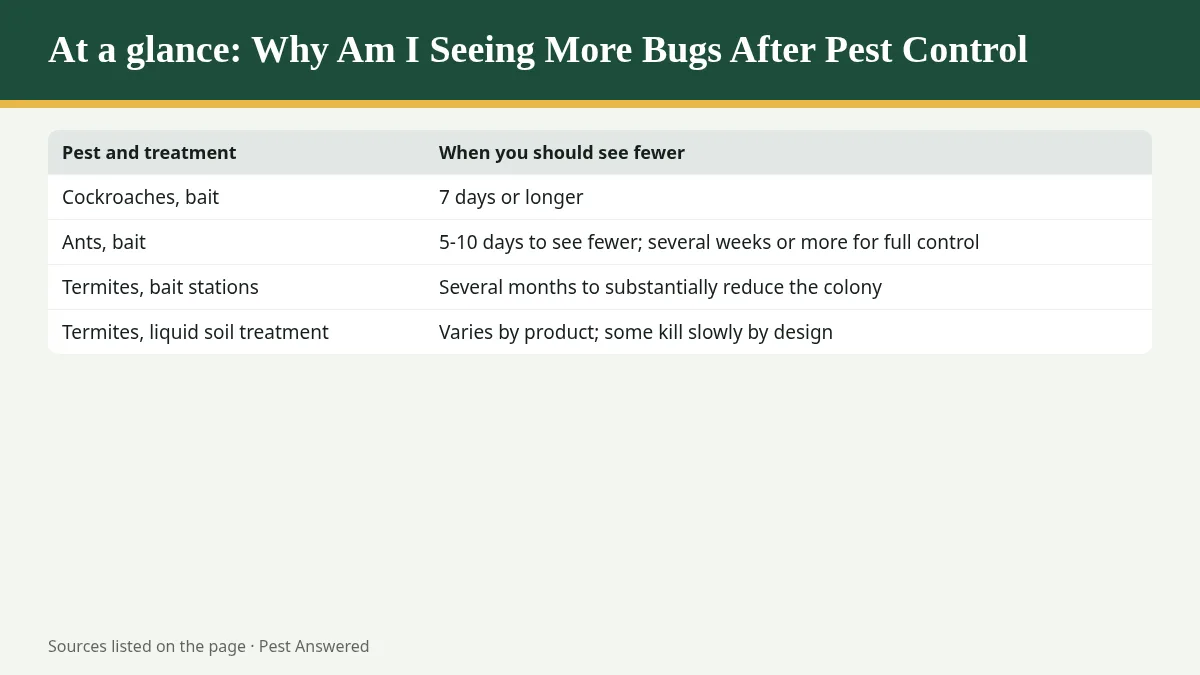 Graphic: summary of this guide, made by our team from the cited sources.
The three main reasons
1. Sprays can flush insects out
Some insecticides irritate insects and drive them out of cracks into the open. Pest researchers call this "flushing." Lab tests on German cockroaches have measured how quickly different pyrethroid insecticides flush roaches out and knock them down, and found it varies by product and formulation (Arthropod Management Tests).
UC IPM warns that foggers, bombs and aerosol sprays "may repel and disperse cockroaches to other areas without actually killing them" (UC IPM). NPIC also notes that some pesticides repel cockroaches rather than kill them (NPIC).
So for a few days you may see roaches, ants or other insects walking in daylight, moving slowly, or dying in the open. That's different from a growing infestation.
2. Baits work slowly on purpose
Baits mix an insecticide with food. For ants, UC IPM explains that the insecticide "must be slow-acting so workers won't be killed before they get back to the nest," where it can kill the colony, including queens (UC IPM Ants). For German cockroaches, UC IPM says baits work best placed near hiding spots and droppings, and NC State notes that young adult females eat more while developing eggs and can be more susceptible to baiting then (UC IPM; NC State).
While the bait is moving through the colony, you'll still see foragers, sometimes more of them, gathered on the bait. That's expected.
3. Hidden insects are coming out
A treatment doesn't kill everything at once. Eggs may still hatch. UC IPM notes that German cockroach egg cases are carried by the female until 1-2 days before hatching (UC IPM), and NC State gives a 20-30 day egg incubation period (NC State). Young roaches that hatch after the first treatment still need to contact a product or eat bait.
Timelines by pest
| Pest and treatment | When you should see fewer | Source |
|---|---|---|
| Cockroaches, bait | 7 days or longer | UC IPM |
| Ants, bait | 5-10 days to see fewer; several weeks or more for full control | UC IPM Ants |
| Termites, bait stations | Several months to substantially reduce the colony | NC State |
| Termites, liquid soil treatment | Varies by product; some kill slowly by design | NC State |
For termites, see how long termite treatment takes to work. NC State notes that after a fall treatment you may still see swarming termites in spring (NC State).
What to expect, pest by pest
Cockroaches
German cockroaches breed fast, which is why one treatment is rarely the end of it. UC IPM says a German female may produce a new egg case every few weeks, and a single female and her offspring can produce over 30,000 roaches in a year (UC IPM). NC State puts the full cycle from egg to adult at 70 to 100 days (NC State). In practice that means:
- Week 1: roaches out in the open, some dying, especially if a spray or dust was used.
- Weeks 1-2: fewer adults as bait takes effect (UC IPM).
- Weeks 2-4: small nymphs may show up as protected eggs hatch. This is why companies schedule follow-up visits.
Large outdoor species (American, oriental) are a different case. UC IPM says they live outdoors and only temporarily come inside (UC IPM), so you may keep seeing the odd one near doors and drains even when the inside of the house is under control.
Ants
UC IPM explains why perimeter sprays alone often disappoint: spraying around the foundation kills only foraging ants, and "typically the foragers represent only a small proportion of the colony." Perimeter treatments "may appear to knock down the population, but ants will quickly build back up and invade again" (UC IPM Ants). If ants return a couple of weeks after a spray-only service, that's the likely reason. Ask whether baits can be added.
Mice and rats
If rodenticide bait was used indoors, you may notice a smell rather than more animals. UC IPM warns that because house mice stay within about 30 feet of their nest, baiting "will often result in house mice dying inside the structure" (UC IPM). See our dead mouse smell guide for safe cleanup.
With rats, the first days may show no change at all. UC IPM says rats avoid new objects and often avoid traps and baits for the first several days, maybe weeks (UC IPM).
What's normal vs. when to call back
| What you see | Likely meaning |
|---|---|
| More roaches or ants in the open for the first few days, many slow or dying | Normal flushing or bait feeding |
| Ants crowding bait stations | Normal; the bait is being taken |
| Dead insects appearing for a week or two | Normal |
| Small roach nymphs appearing a few weeks later | Eggs hatching; often covered by a follow-up visit |
| Numbers still the same or rising after the timelines above | Call the company back |
| Insects showing up in new rooms where you never had them | Possible scattering from a spray; call back |
| Ants still marching in after several weeks of baiting | Bait may not suit this ant species, or a nest was missed |
UC IPM says if ants aren't taking the bait, reposition the stations or try a different bait product (UC IPM Ants). NPIC notes some cockroaches have become resistant to certain pesticides or avoid certain baits (NPIC). These are good reasons to call the company rather than wait.
What not to do after treatment
Don't spray over baits. Killing the foragers stops them from carrying bait home. UC IPM says spraying ants indoors won't prevent more ants from entering, and that barrier sprays can sometimes make things worse by trapping ants indoors (UC IPM Ants).
Don't set off a bug bomb. UC IPM advises avoiding foggers, bombs and aerosol sprays for cockroaches because they can scatter them (UC IPM).
Don't clean the bait away. Ask your technician where baits and gels were placed, and avoid wiping those spots for the time they specify. Keep children and pets away from bait stations.
Do clean up food and water. UC IPM says removing other food sources greatly improves how well baits work (UC IPM). Fix leaks, store food in sealed containers, and take out trash.
Do follow re-entry instructions. Your technician's instructions and the product label tell you when it's safe to go back into treated rooms. NPIC reminds everyone to read and follow the label (NPIC).
Questions to ask your technician
- What product did you use, and is it a spray, dust, gel or bait?
- How many days until I should see fewer insects?
- Where did you put baits, and should I avoid cleaning there?
- When is the follow-up visit, and what happens if I still see activity?
- Is there a service guarantee or free callback period?
Frequently asked questions
Is it normal to see more bugs after pest control?
Often, yes. Some sprays drive insects out of hiding, and baits are slow by design. A short-lived increase in the first days is common; a growing problem after a couple of weeks is not.
How long after pest control will I see roaches?
UC IPM says a cockroach bait program may take 7 days or longer before you see fewer roaches.
How long do ant baits take to work?
UC IPM says it can take 5 to 10 days to see fewer ants, and several weeks or more for complete control.
Should I spray the bugs I see after treatment?
Usually not. Spraying can kill the insects that would carry bait back to the nest, and some sprays scatter pests. Ask your technician first.
Sources
- Pest Notes: Cockroaches (UC ANR Pub. 7467), UC Statewide IPM Program
- Pest Notes: Ants, UC Statewide IPM Program
- Cockroaches, National Pesticide Information Center (NPIC)
- Flushing Effect and Knockdown Activity of Pyrethroids, 1988, Arthropod Management Tests
- Termite Baiting Systems, NC State Extension
- Biology and Behavior of the German Cockroach, NC State Extension
- Pest Notes: House Mouse, UC Statewide IPM Program
- Pest Notes: Rats, UC Statewide IPM Program
Spotted an error? See our corrections policy or email contact@pestanswered.com.

Pest Answered Editorial Team
Our editors research each guide from the listed sources and check every claim before publishing. Editorial policy

Expert review in progress
This guide has not yet been reviewed by a pest control professional. We will add the reviewer’s name and the review date here once that is done.
Related guides
-
 Cockroaches
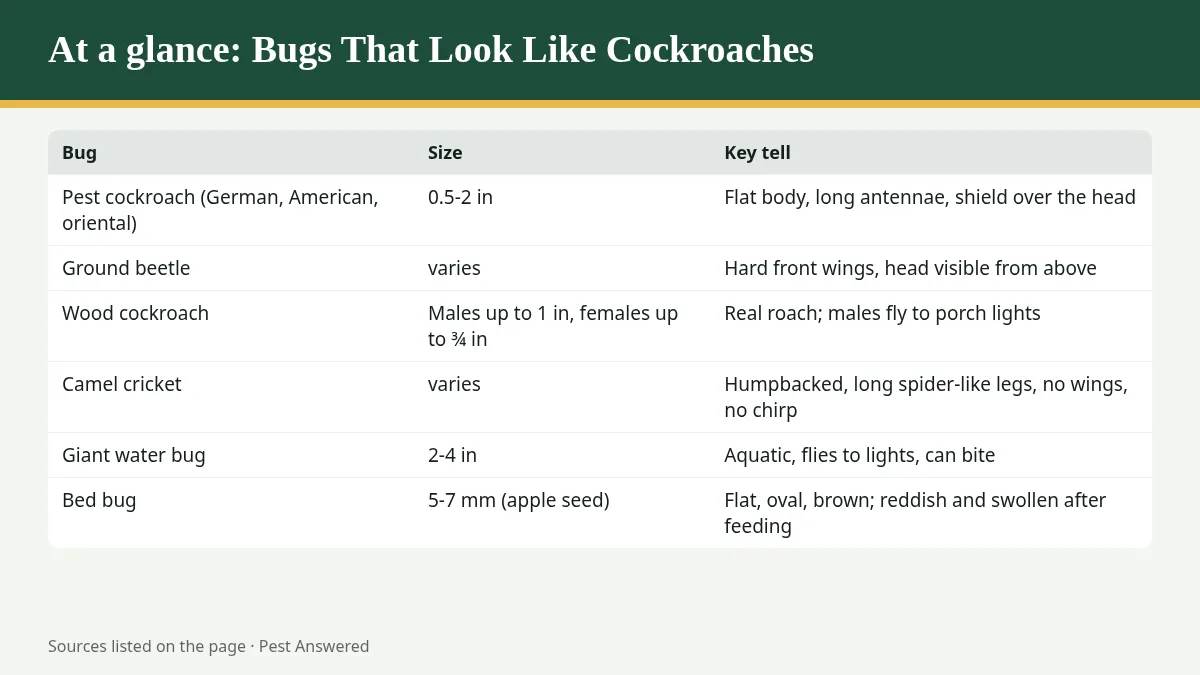
 Bugs That Look Like Cockroaches (and How to Tell Them Apart)
Ground beetles, wood roaches, camel crickets, water bugs and bed bugs get mistaken for cockroaches. Here's how to tell each one apart in under a minute.
-
 Mice & Rats
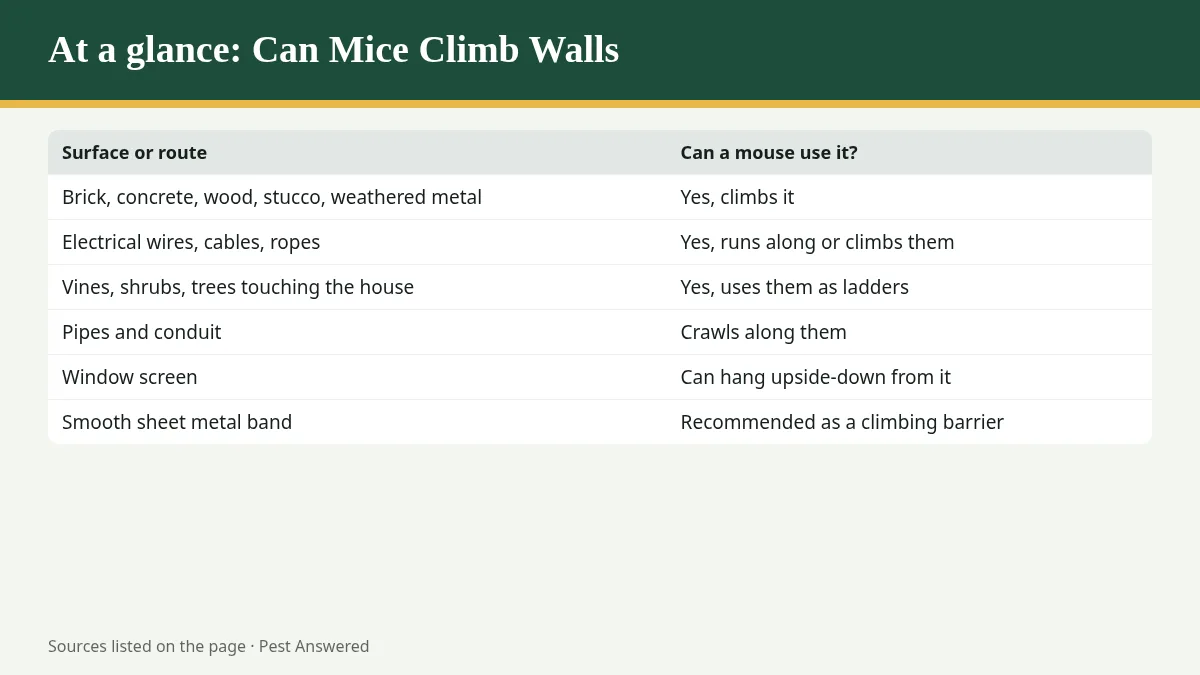
 Can Mice Climb Walls? Yes. Here's What They Can and Can't Climb
Yes, house mice climb any rough wall: brick, wood, concrete, siding. See what they can't grip, how high they jump, and how to block their routes.
-
 Mice & Rats
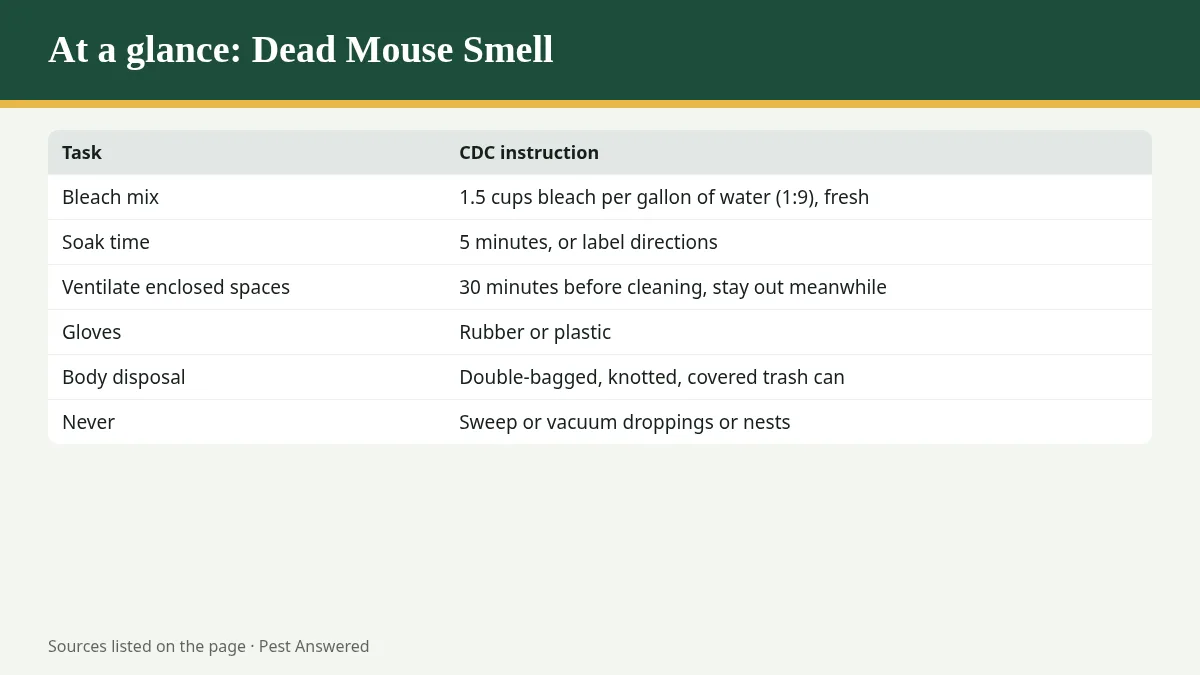
 Dead Mouse Smell: How Long It Lasts and How to Get Rid of It
A dead mouse smell usually fades once the body dries out, in about a few weeks. How to find the source, clean up safely per CDC, and what not to do.
-
 Wasps & Bees
 Do Wasps Come Out at Night? Most Don't. Here Are the Exceptions
Most wasps stay in the nest at night. European hornets and some parasitic wasps do fly after dark and come to porch lights. What it means for you.