Do Wasps Come Out at Night? Most Don't. Here Are the Exceptions
Most wasps don't come out at night. Yellowjackets, paper wasps and most hornets return to the nest after dark, and the University of Kentucky notes that at night "most of the insects are in the nest and less active" (Univ. of Kentucky).
The main exception in the U.S. is the European hornet, which flies both day and night and is drawn to lights (UMD). Some harmless parasitic wasps also fly at night. Knowing which is which matters if you plan to deal with a nest.
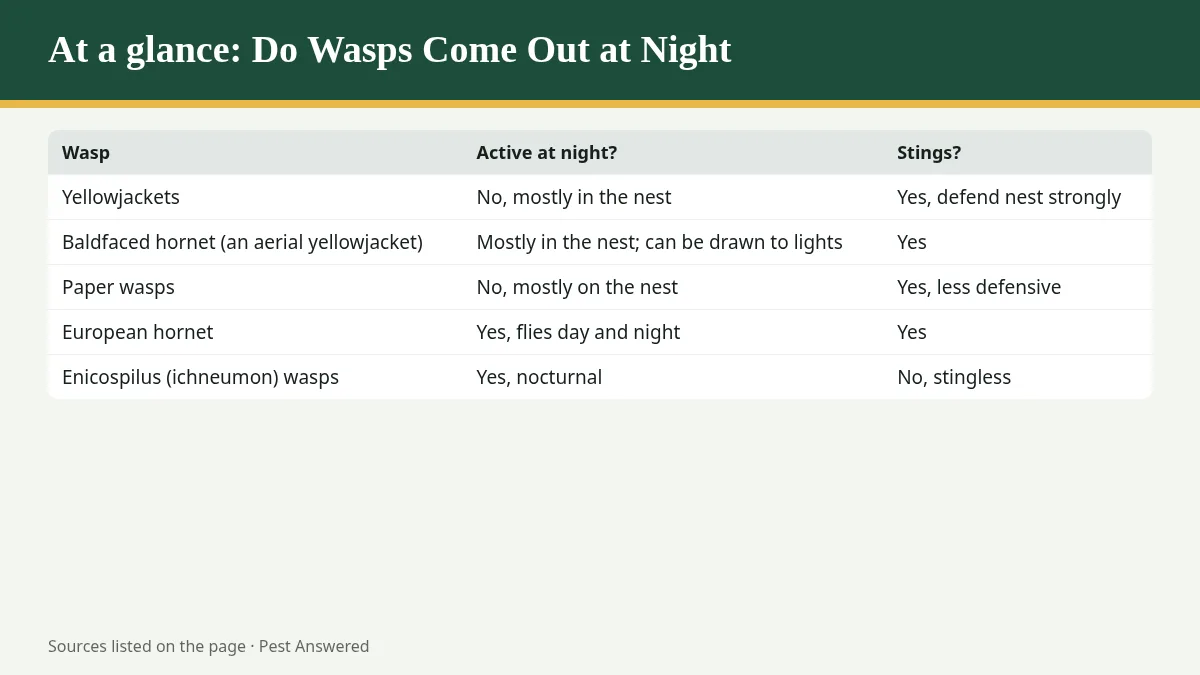 Graphic: summary of this guide, made by our team from the cited sources.
Which wasps are out after dark?
| Wasp | Active at night? | Stings? | Source |
|---|---|---|---|
| Yellowjackets | No, mostly in the nest | Yes, defend nest strongly | Univ. of Kentucky |
| Baldfaced hornet (an aerial yellowjacket) | Mostly in the nest; can be drawn to lights | Yes | Univ. of Kentucky, NC State |
| Paper wasps | No, mostly on the nest | Yes, less defensive | Univ. of Kentucky, UMD |
| European hornet | Yes, flies day and night | Yes | UMD, Ohio State |
| Enicospilus (ichneumon) wasps | Yes, nocturnal | No, stingless | NC State |
Why most wasps stay in at night
Social wasp workers forage for nectar, sugary liquids and insect prey to feed their young (UMD). After dark the foragers come home. The colony is still alive inside, and it will still defend the nest if disturbed, but most wasps aren't flying.
That's the reasoning behind a common extension recommendation. The University of Kentucky says that while "it's best to treat all wasp and hornet nests at night," homeowners dealing with hornets should do so at night "when most of the insects are in the nest and less active," and yellowjacket nests should be treated at night for the same reason (Univ. of Kentucky).
The exception: European hornets
The European hornet is the only true hornet established in the U.S. It's large, ¾ to 1⅜ inches long, reddish-brown with yellow on the abdomen and face (UMD).
It flies at night. Ohio State calls it "one of the few hornet species that flies at night." It's often found at windows, attracted to light from inside homes, barns and garages, and can act aggressively toward headlights, floodlights and porch lights that shine toward its nest (Ohio State). UMD adds that it may be attracted to a flashlight and can collide with windows (UMD).
Its nest is hidden. European hornets nest in cavities: hollow trees, attics, barns, wall voids and shutters, usually with an entry 6 feet or more above the ground (Ohio State). At their largest, nests may contain 200-400 workers (Ohio State); UMD says larger nests can exceed 1,000 (UMD).
Seeing them at your light doesn't mean the nest is next door. NC State notes that European hornets can fly a good distance from their nest, so lights alone don't prove a colony is nearby (NC State). They also say late summer brings more of them, because colonies are reaching hundreds of individuals by then.
The harmless night flyer: Enicospilus wasps
If the "wasp" at your light is about an inch long, mottled tan, orange and brown, with dark eyes, it may be an Enicospilus wasp. NC State describes these as "large, stingless wasps that are commonly found at porch lights" because they fly at night. They parasitize caterpillars of large moths and, since they don't defend colonies, "they are harmless to humans." Their size and shape can make them look like crane flies (NC State).
No action needed. Turning off the light is enough if they bother you.
When in the year wasps are most active
Time of year matters as much as time of day. UMD describes the yearly cycle of a social wasp colony (UMD):
- Spring: a single queen comes out of winter shelter and starts a small nest alone.
- Summer: workers take over building and foraging. The colony keeps growing.
- Late summer to early autumn: the colony hits its largest size. New queens and males are raised, and UMD notes workers "might be more easily agitated and defensive of a disturbed nest" at this stage.
- Winter: freezing weather ends the colony. Only young mated queens survive, sheltering elsewhere, and the old nest isn't reused.
That's why late summer brings the most stings and the most wasps at porch lights. NC State noted the same pattern for European hornets at lights in August, when colonies were reaching hundreds of individuals (NC State). If a nest is out of the way, UMD and Kentucky both point out you can simply wait for a hard frost to end it (UMD; Univ. of Kentucky).
Do wasps sleep?
Our sources don't use the word "sleep." What they describe is that most social wasps are in the nest and less active at night (Univ. of Kentucky). They are still able to respond if the nest is disturbed, so "inactive" doesn't mean "safe to touch."
What this means if you're dealing with a nest
For yellowjackets and most hornets, night is the safer time. The University of Kentucky recommends (Univ. of Kentucky):
- Find the nest opening in daylight so you know where to aim after dark.
- Approach slowly at night.
- Don't shine the flashlight directly into the entrance, which can startle the wasps and make them fly toward the light. Light the opening from the side, and if possible set the light on the ground instead of holding it.
- For hornets, wear a full wasp suit and head veil sealed at the wrists, ankles and collar, and don't break the paper envelope of the nest.
- Wait at least 3-4 days before removing a treated hornet nest.
UMD also advises never shining a light at a nest entrance (UMD).
For paper wasps, Kentucky says daytime treatment can work if you don't stand directly under the nest (Univ. of Kentucky).
For European hornets, night isn't much safer. Ohio State notes that because they fly at night, "unlike other common nuisance wasps, the risk of being stung does exist when treating after dark." Wear protective clothing, follow the label, and consider hiring a professional (Ohio State).
Never block a nest entrance in a wall. Ohio State warns that hornets can chew new exit holes through drywall and come out inside the house (Ohio State).
Always read the label. Ohio State's fact sheet ends with "The label is the law for pesticide use" (Ohio State).
Call a professional if the nest is high, inside a wall, or if anyone in the house is allergic to stings. Kentucky notes that allergic reactions to wasp and hornet stings account for about 225,000 emergency room visits a year in the U.S. (Univ. of Kentucky).
Cutting down on wasps at your lights
- Turn off outdoor lights or switch to motion-activated lights (UMD).
- Close the blinds. Ohio State says turning off lights or drawing the blinds can help (Ohio State).
- Use warmer bulbs. UMD says LED bulbs with a warmer color temperature (yellower light) have been shown to attract fewer insects overall than bluish-white light (UMD).
- Don't point floodlights at a known nest (Ohio State).
If you're not sure what kind of nest you have, our guide to what wasp nests are made of shows how to tell them apart.
Frequently asked questions
Do wasps come out at night?
Most common nuisance wasps (yellowjackets, paper wasps and most hornets) stay in the nest at night. European hornets are the main exception and can fly day and night.
When are wasps least active?
At night, when most of the colony is in the nest and less active. That's why extension entomologists recommend treating most nests after dark.
Why are there wasps at my porch light at night?
In the eastern U.S. they are often European hornets, which fly at night and are drawn to lights. Large, orange-brown, stingless Enicospilus wasps also come to lights.
Is it safe to spray a wasp nest at night?
It's safer than daytime for yellowjackets and most hornets, but European hornets fly at night, so stings are still possible. Wear protective clothing and follow the label.
Sources
- ENTFACT-620: Controlling Wasps, Hornets, & Yellowjackets, University of Kentucky
- European Hornet (ENT-0102), Ohio State University Extension
- Social Wasps: Yellowjackets, Hornets, and Paper Wasps, University of Maryland Extension
- Wasps at Porch Lights, NC State Extension Entomology (2021)
- Enicospilus Wasp, NC State Extension Entomology
Spotted an error? See our corrections policy or email contact@pestanswered.com.

Pest Answered Editorial Team
Our editors research each guide from the listed sources and check every claim before publishing. Editorial policy

Expert review in progress
This guide has not yet been reviewed by a pest control professional. We will add the reviewer’s name and the review date here once that is done.
Related guides
-
 Wasps & Bees
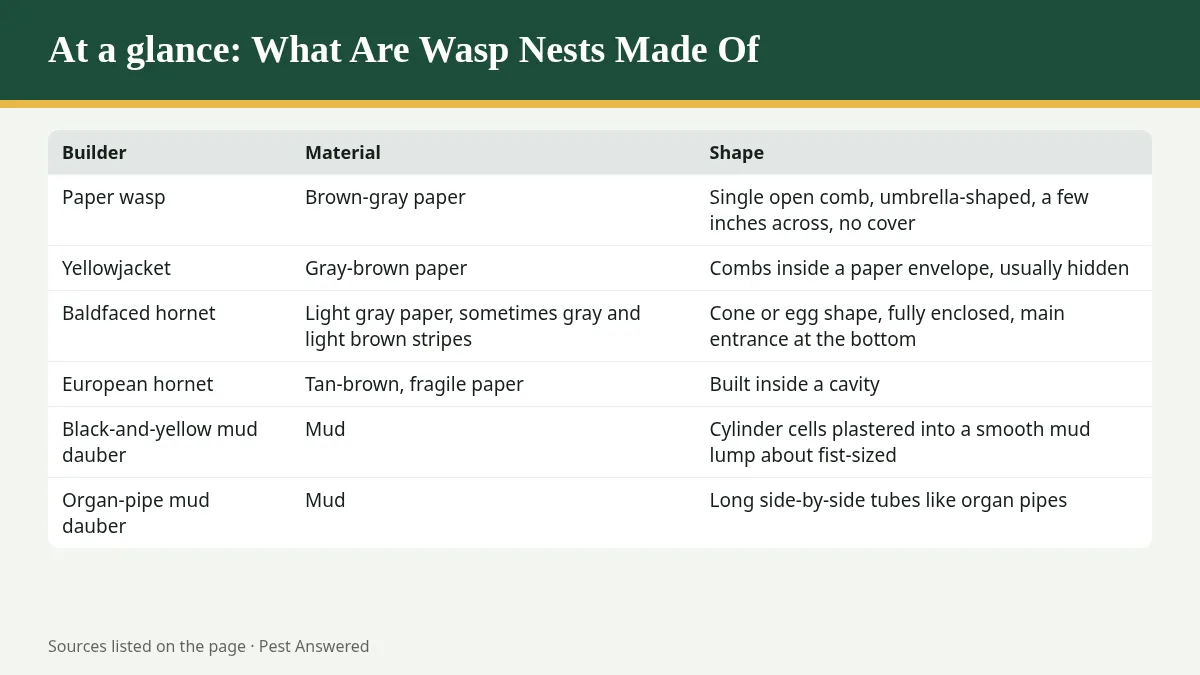
 What Are Wasp Nests Made Of? Paper, Mud, and How to Tell Them Apart
Most wasp nests are paper made from chewed wood pulp and saliva. Mud daubers build with mud. How to ID a nest by its material and shape, and stay safe.
-
 Cockroaches
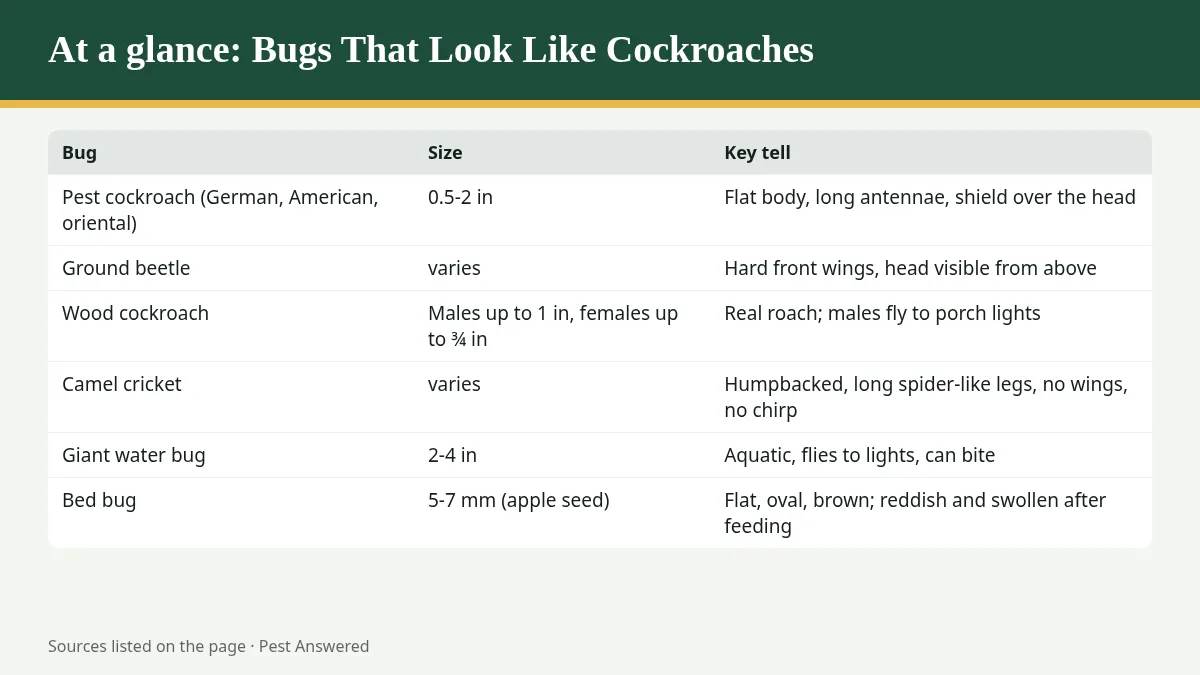
 Bugs That Look Like Cockroaches (and How to Tell Them Apart)
Ground beetles, wood roaches, camel crickets, water bugs and bed bugs get mistaken for cockroaches. Here's how to tell each one apart in under a minute.
-
 Mice & Rats
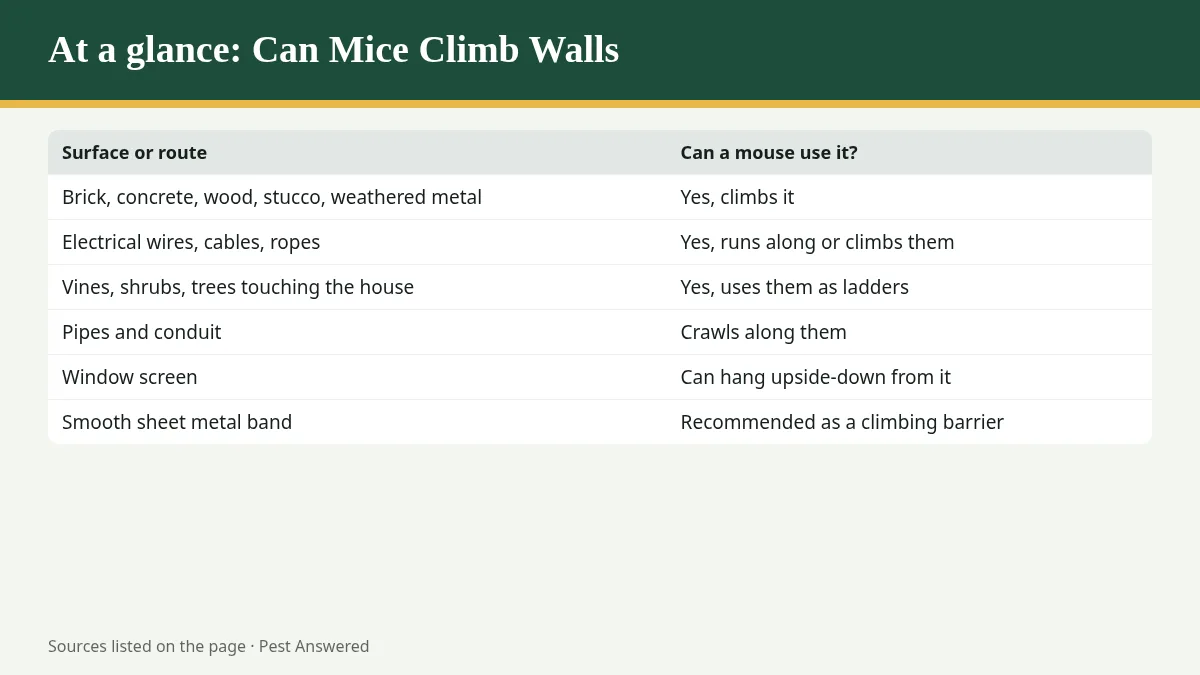
 Can Mice Climb Walls? Yes. Here's What They Can and Can't Climb
Yes, house mice climb any rough wall: brick, wood, concrete, siding. See what they can't grip, how high they jump, and how to block their routes.
-
 Mice & Rats
 Dead Mouse Smell: How Long It Lasts and How to Get Rid of It
A dead mouse smell usually fades once the body dries out, in about a few weeks. How to find the source, clean up safely per CDC, and what not to do.